When people talk about “types of caviar”, they can mean many different things: classic sturgeon caviar like Beluga and Ossetra, modern farmed varieties such as Siberian, or even salmon roe that is not technically caviar at all.
This guide keeps everything simple but precise. You will see the real difference between Beluga, Ossetra and Sevruga, what the newer farmed sturgeon types are, how salmon and other fish roe compare, and which style is best for your taste, occasion and budget. If you want a deeper intro first, you can also read what caviar really is or how caviar is made.
Classic sturgeon caviar vs. other fish roe
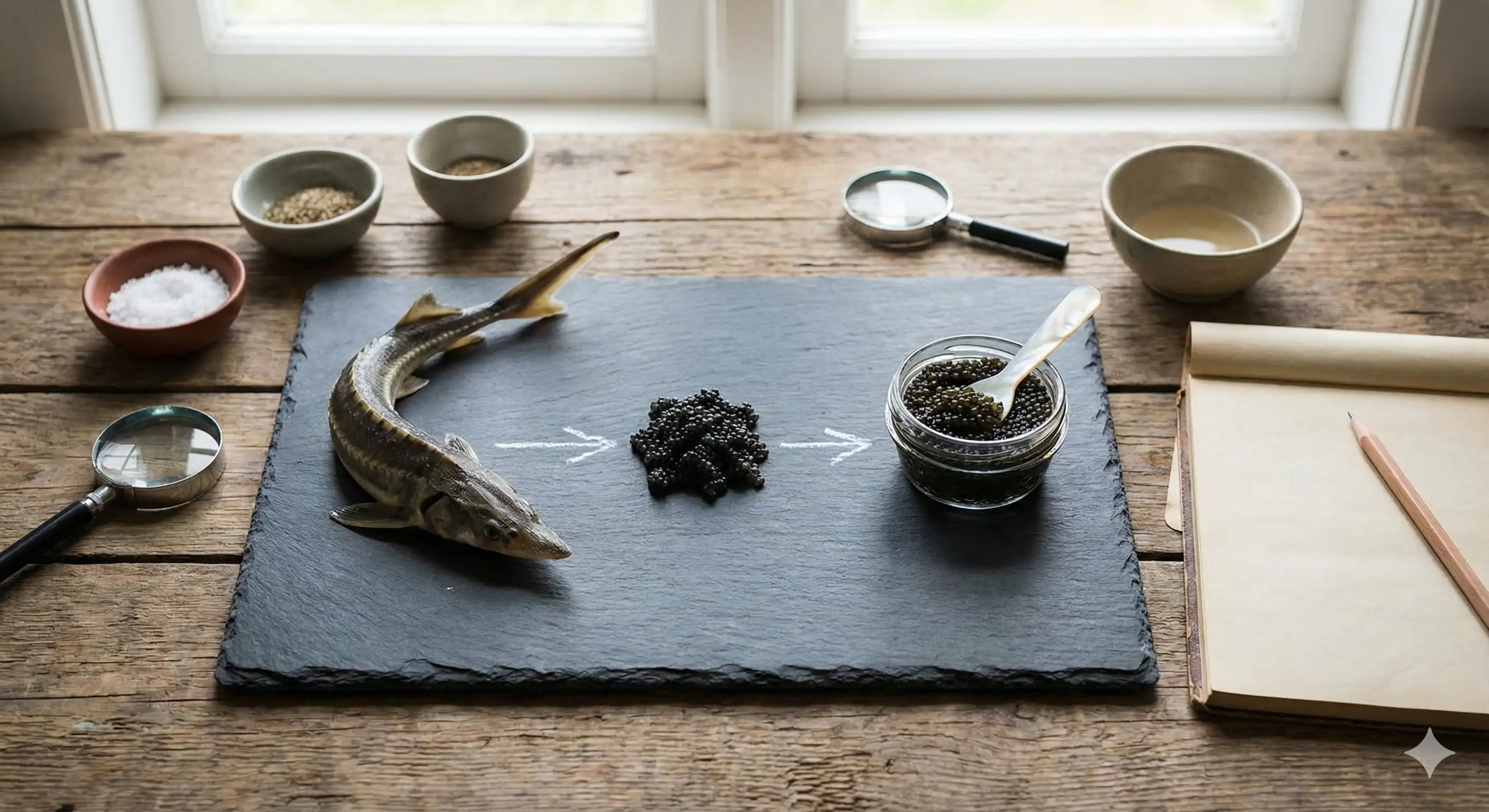
By tradition, real caviar means salt-cured roe from the sturgeon family only. The most famous classic names are Beluga, Ossetra and Sevruga.
On store shelves, you also see products like salmon roe, trout roe, lumpfish roe or even seaweed “vegan caviar”. These can be tasty, but they are correctly called fish roe or imitation caviar, not classic sturgeon caviar.
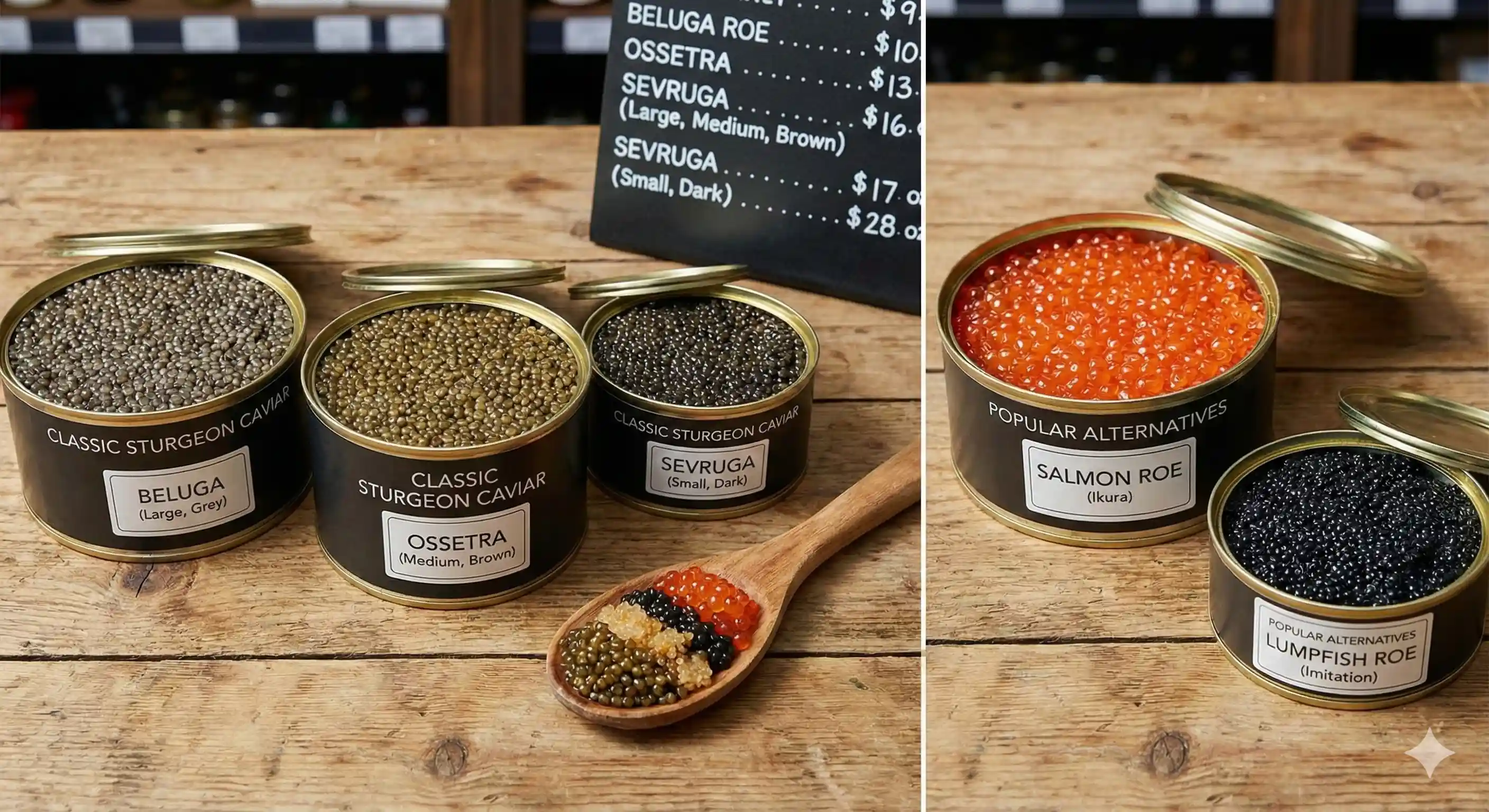
Beluga, Ossetra & Sevruga: the classic trio
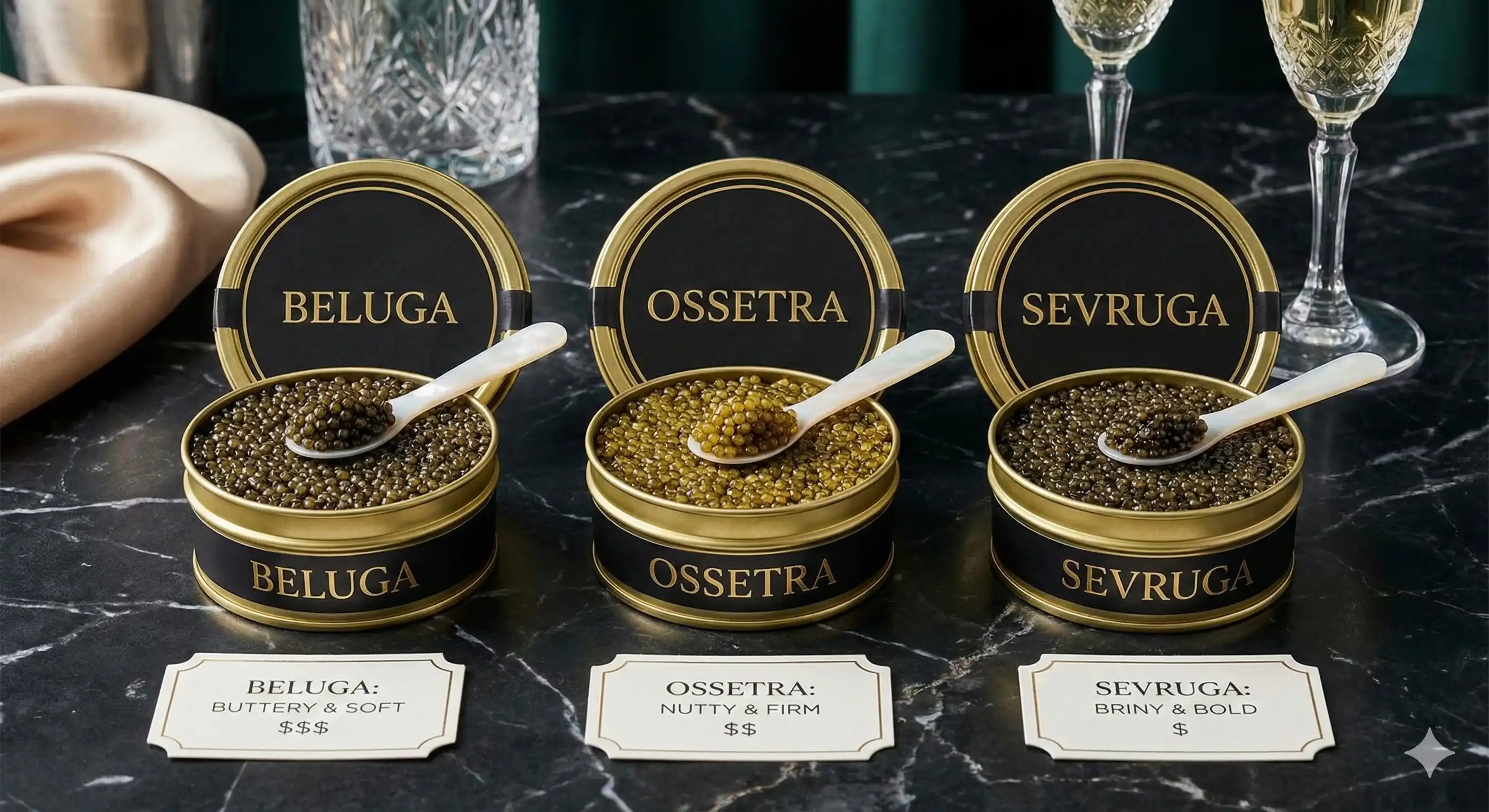
The three classic sturgeon names you see most often are Beluga, Ossetra and Sevruga. All three are real caviar, but they look, taste and behave differently in the tin and on the palate.
- Beluga caviar – very large pearls, usually grey to silver. Beluga is famous for a delicate shell and a texture that feels more like it melts than “pops”. The finish is long, clean and buttery, with almost no sharp edges.
- Ossetra caviar – medium-size eggs with a firmer shell than Beluga. When you press it against the roof of your mouth, it should give a distinct pop before releasing a richer finish that many people describe as toasted walnut, cream, or elegant brininess.
- Sevruga caviar – smaller, darker eggs with a brighter, more intense flavour. Sevruga is more sea-forward and often has a stronger aroma, with a noticeable pop and sharper character.
Beluga technical specs
- Scientific name: Huso huso
- Pearl size: ≈ 3.2–3.4 mm (largest among classic types)
- Texture: delicate membrane, creamy mouthfeel, “melt” style
- Colour notes: elephant grey to steel silver
- Best pairing: minimalist service; mother-of-pearl spoon, no lemon, very light garnish
Ossetra technical specs
- Scientific name: Acipenser gueldenstaedtii
- Pearl size: ≈ 2.8–3.0 mm (medium–large)
- Texture: firm pop with a creamy centre
- Colour notes: golden olive to deep amber and dark brown
- Best pairing: blinis, crème fraîche, finely chopped egg, dry Champagne
Sevruga technical specs
- Scientific name: Acipenser stellatus
- Pearl size: ≈ 2.2–2.6 mm (smallest of the trio)
- Texture: tender grains with a noticeable pop and strong aroma
- Colour notes: dark grey to nearly black
- Best pairing: stronger pairings; blinis, crème fraîche, ice-cold vodka or dry sparkling wine
Beluga is often the most expensive not only because of taste, but time. A Beluga sturgeon can take 15–20 years to produce eggs, while faster-growing species (like Siberian) mature much sooner. You are paying for the farmer’s time and the rarity of top harvests.
| Type | Egg size | Texture and finish | Typical price level |
|---|---|---|---|
| Beluga | ≈ 3.2–3.4 mm (very large) | Melt-style, very creamy, long clean finish | Highest among classic types |
| Ossetra | ≈ 2.8–3.0 mm (medium–large) | Distinct pop, layered nutty-cream finish | Premium, below Beluga |
| Sevruga | ≈ 2.2–2.6 mm (small) | Strong sea character, bright finish, noticeable pop | Entry premium among sturgeon |
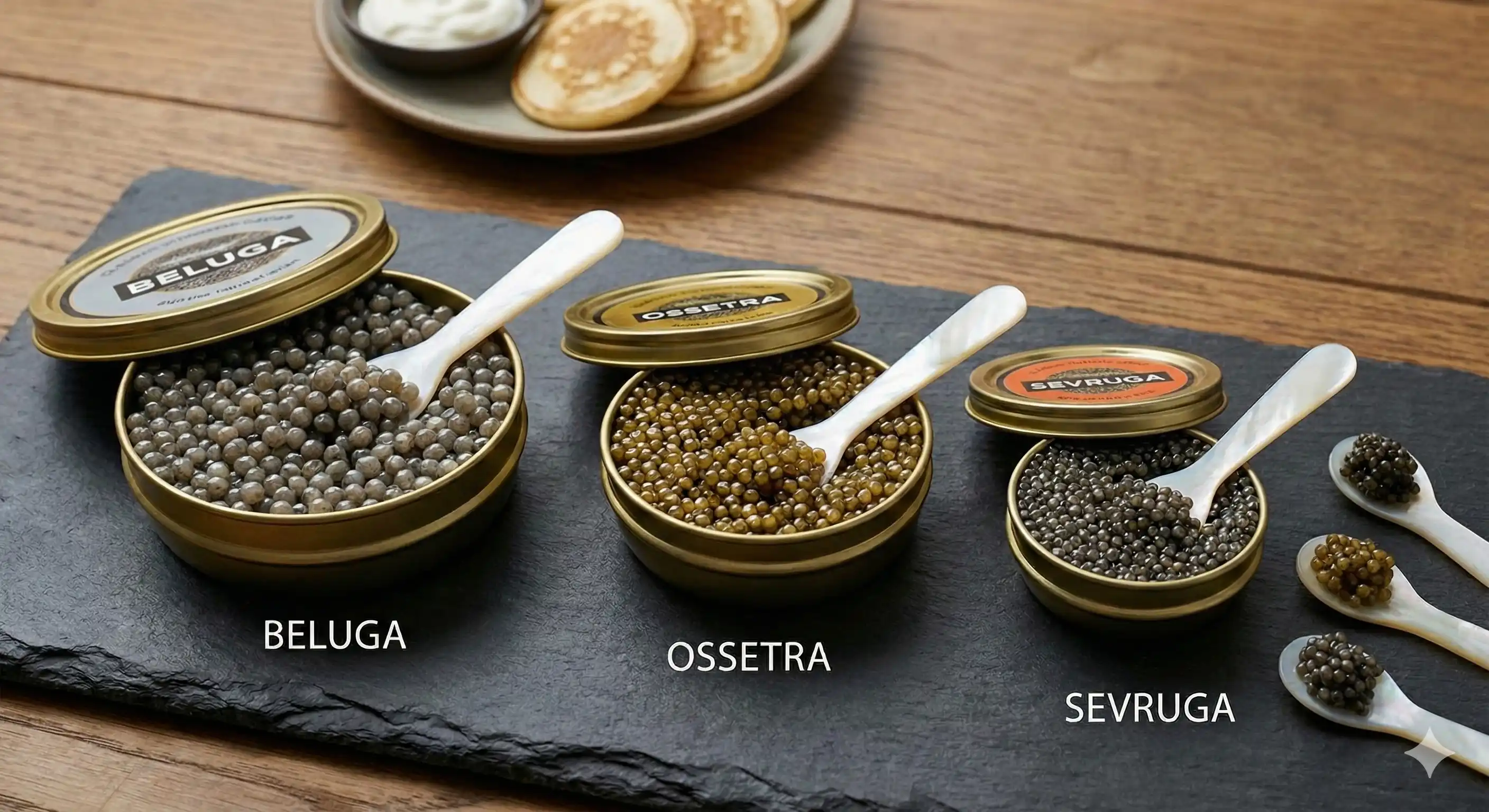
Modern sturgeon caviar: Siberian, Kaluga & others
Because wild sturgeon became endangered, most legal caviar now comes from farmed sturgeon. Farms around the world raise several species that you may see on labels instead of the classic Caspian names.
- Siberian sturgeon (Baerii) – small to medium eggs with a smooth, savoury profile. Often used as a high-quality “everyday” sturgeon caviar without Beluga-level pricing.
- Kaluga / Amur caviar – Beluga-style large pearls and buttery profile, often chosen as a premium alternative when true Beluga is limited.
- White sturgeon caviar – medium to large eggs with clean flavour and great structure, common in North America and parts of Europe.
What is hybrid caviar?
To improve sustainability and create more stable harvests, many farms now use hybrid sturgeon. The result can be excellent caviar with a Beluga-like style at a more accessible price.
Buyer warning: many tins marketed as “River Beluga” are actually Kaluga hybrids, not true Huso huso. They can be delicious, but if you want “true Beluga”, don’t rely on the marketing name. Check the Latin species name.
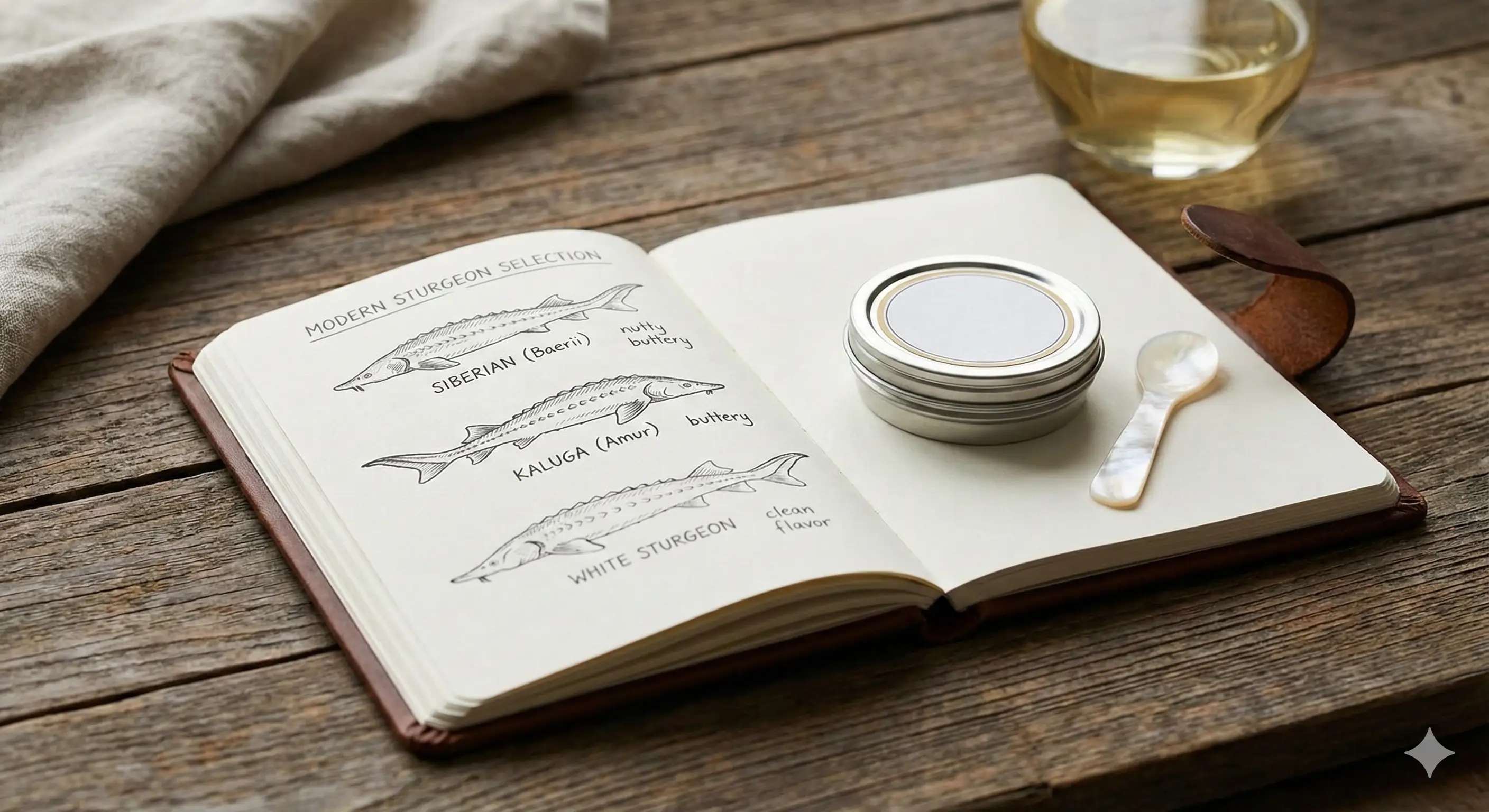
Salmon roe, trout roe & “vegan caviar”
Outside the sturgeon family, there are colourful alternatives people still call “caviar” in everyday language. These are great for canapés and sushi, but they are not sturgeon caviar.
- Salmon roe (Ikura) – large orange eggs with a juicy pop and strong seafood flavour.
- Trout roe – smaller than salmon, often milder, with a pleasant burst.
- Tobiko – tiny crunchy eggs often dyed for sushi.
- Seaweed “vegan caviar” – imitation pearls made from algae or plant ingredients.
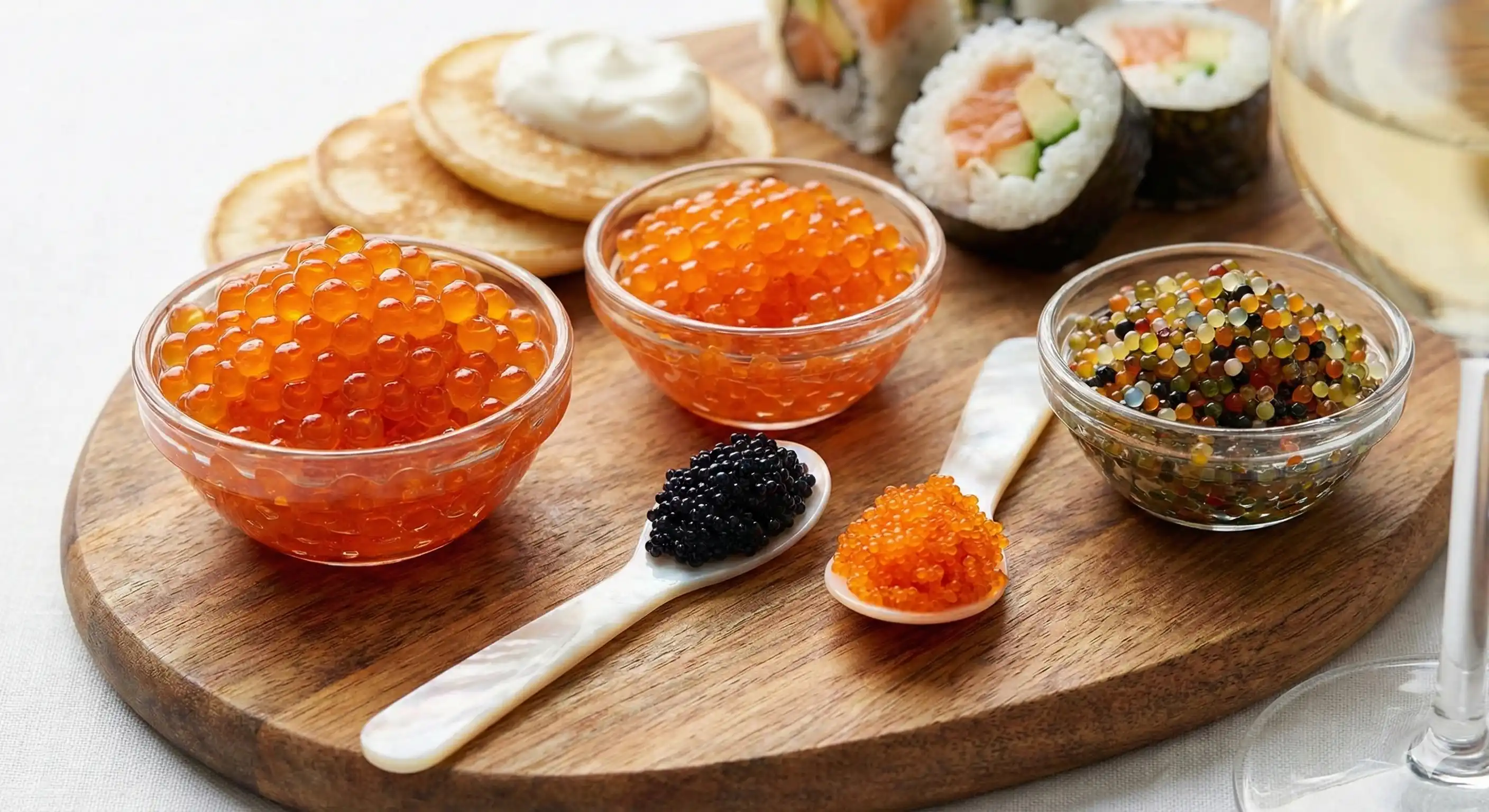
Caviar taste chart: Beluga vs Ossetra vs Sevruga
A simple way to choose is to think in terms of texture first, then flavour strength:
- Melt and buttery: Beluga and some high-grade Kaluga.
- Pop and layered: Ossetra and white sturgeon.
- Bright and sea-forward: Sevruga and some Siberian.
- Casual and colourful: salmon and trout roe.
Thamin recommends
Best for first-timers: start with Beluga caviar for a soft, buttery introduction. For a “foodie” choice, Ossetra wins on pop and complexity. For strong ocean flavour, Sevruga is bold. For top luxury, try Imperial Beluga.
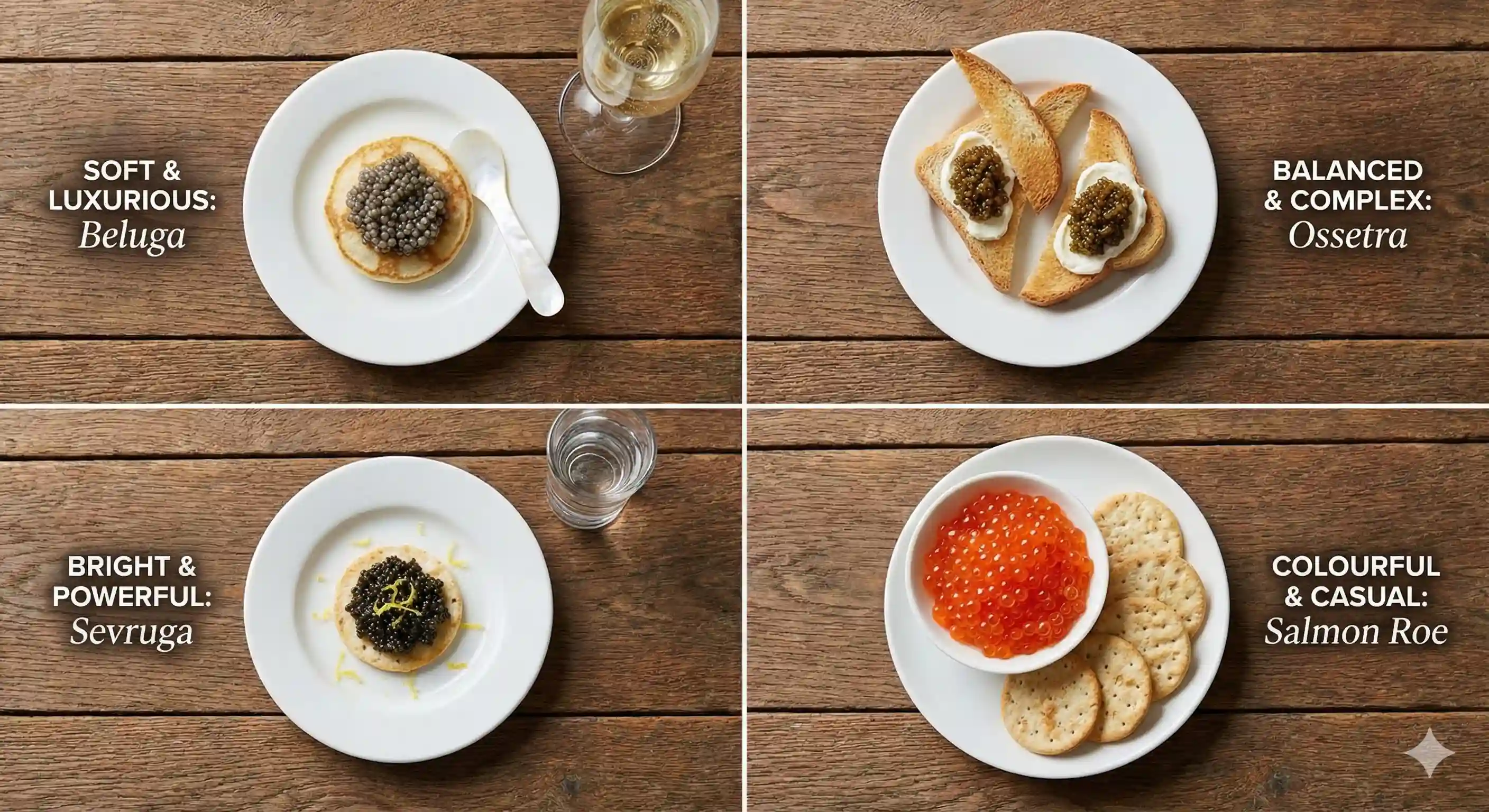
The "Which One Do I Buy?" Cheat Sheet
Still confused? Here is our quick recommendation based on who you are serving:
- For the Boss / VIP: Choose Beluga. It is the recognized status symbol. The name alone impresses, and the mild taste is safe for everyone.
- For the "Foodie" Friend: Choose Ossetra. Food lovers appreciate the complex finish and the firm pop more than the softness of Beluga.
- For a Big Party: Choose Siberian (Baerii). Great flavour, darker and savoury, perfect for topping many blinis without breaking the budget.
Quick buying guide: choose by goal or occasion
If you are choosing caviar for a specific event, this quick guide can help:
| Goal | Best caviar choice | Why? |
|---|---|---|
| First-time taster | Beluga or Kaluga | Mildest flavour and the most luxurious texture, ideal introduction. |
| Best value | Siberian (Baerii) | Authentic sturgeon taste at an entry premium price, great for casual dinners. |
| Gourmet gift | Imperial Ossetra or Imperial Beluga | Beautiful pearls and refined tasting notes appreciated by experienced buyers. |
| Sushi / garnish | Salmon roe (Ikura) | Huge pop and bright colour, perfect for topping and visual impact. |
Serving & storing any type of caviar
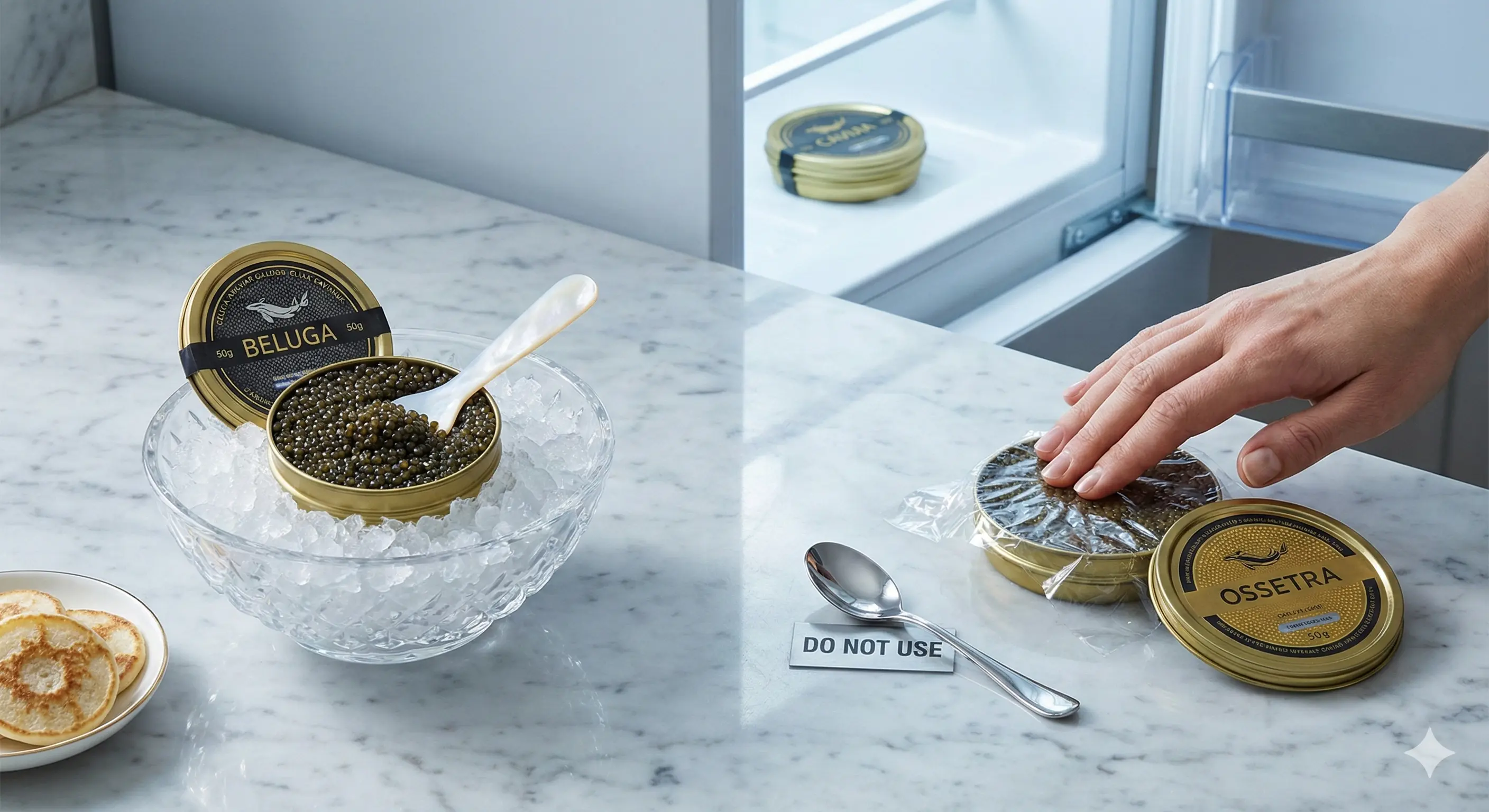
- Keep caviar in the coldest part of the fridge, ideally between -2°C and +2°C.
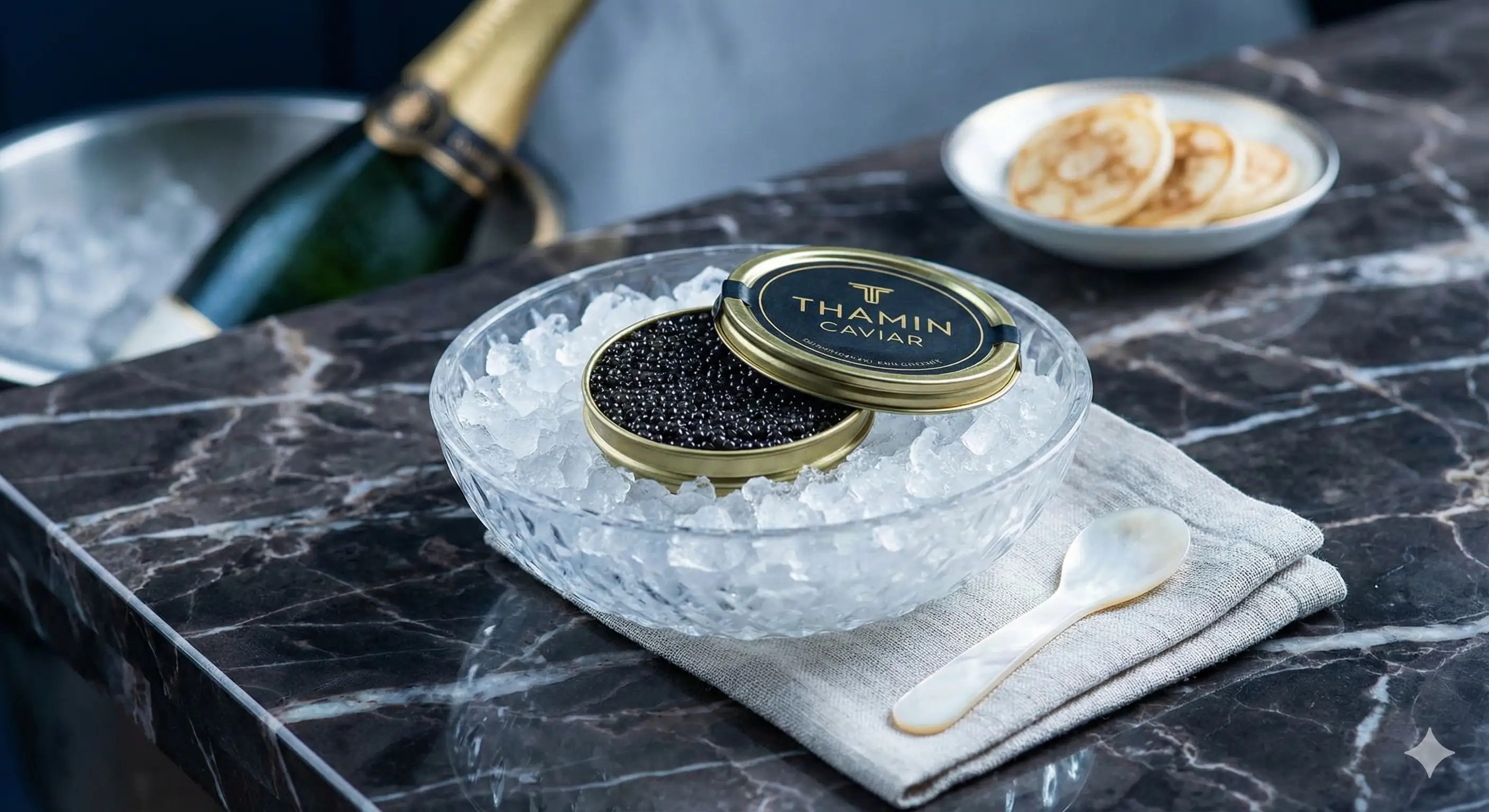
- Serve the tin on crushed ice so it stays chilled at the table.
- Use mother-of-pearl, glass, ceramic or good plastic spoons instead of reactive metal spoons.
- Once opened, finish the tin within 1–2 days for the best taste and texture.