You just bought caviar. Now the only goal is simple: keep it cold, keep it clean, and don’t destroy the texture. Caviar is raw, lightly salted roe. It behaves like premium raw seafood, not a pantry product.
This guide tells you exactly what to do immediately after purchase, how to store it at home, how to serve it without ruining the taste, and the warning signs that mean your tin is no longer safe.
Quick Summary: Get it cold fast at 0–3°C. Store the tin flat in the coldest part of the fridge. If your fridge runs warm, use the ice-bowl trick. Open only when you are ready to serve, then finish within 24–48 hours. If the tin is bulging or hisses, discard it.
Step 1 What to do immediately after purchase
In professional caviar handling, the first rule is simple: protect the cold chain. Temperature swings are the fastest way to damage texture and shorten safe shelf life. If you treat it like raw sashimi, you will never go wrong.
- Go home directly. Do not leave caviar in a warm car, even “just for a few minutes.”
- Keep it insulated. Use an insulated bag with gel packs if travel is longer than 15–20 minutes.
- Check the tin condition. If the lid looks domed or bulging, do not eat it.
- Do not open it early. Air starts oxidation immediately and the aroma changes fast.
Step 2 Put it in the right place in the fridge
Professional caviar storage is 0–3°C. Many home fridges run warmer, often 4–7°C, especially when the door is opened frequently. Warmer storage speeds up bacterial activity and makes the clean taste feel heavier and less precise.
The ice bowl trick
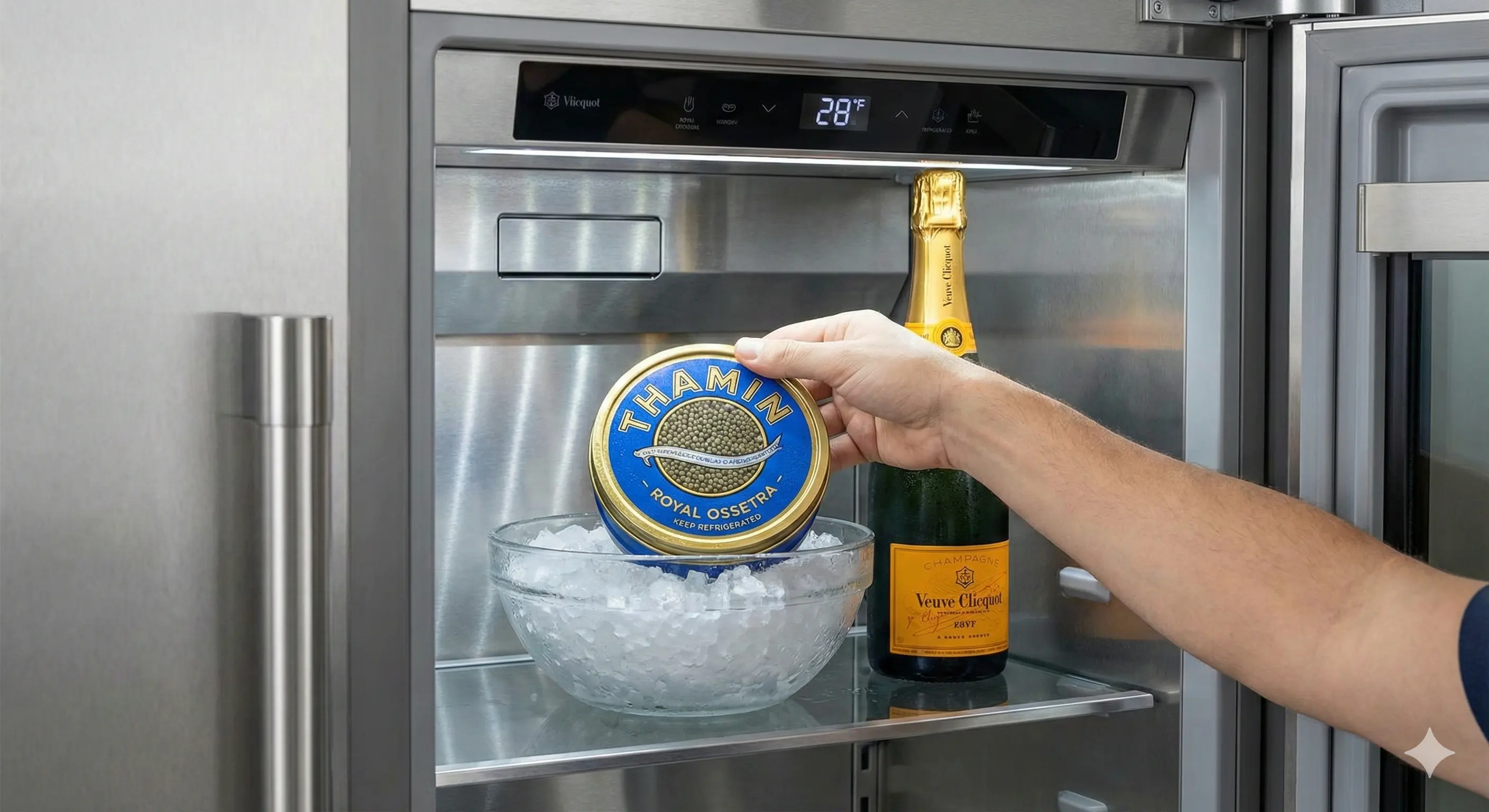
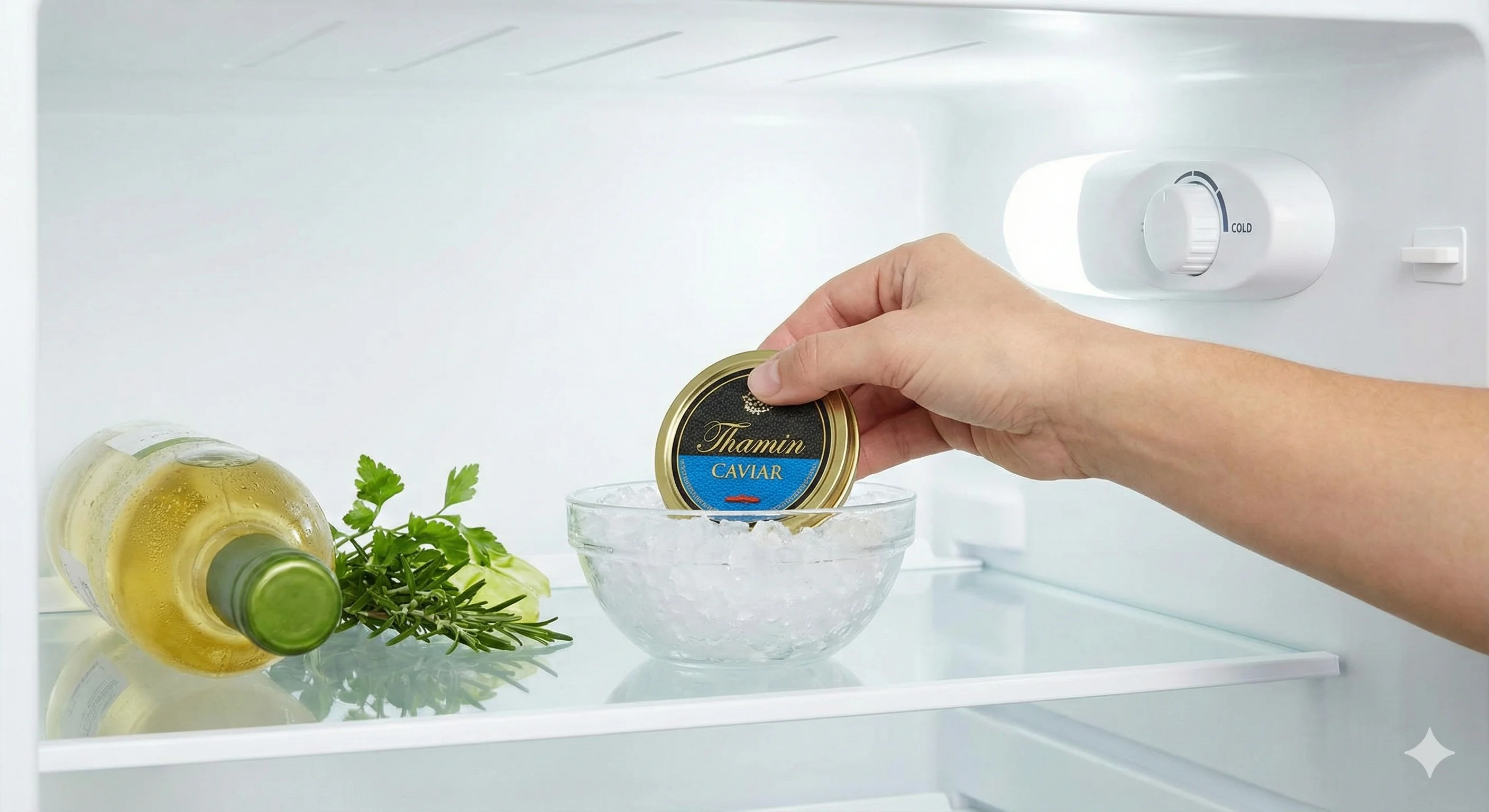
Here is a real-world expert hack used by chefs at home: place the closed tin in a small bowl, surround it with crushed ice, and keep that bowl on the coldest shelf of your fridge. This creates a micro-climate close to 0°C without freezing. Replace the ice once it melts.
- Store tins flat. Flat storage keeps the eggs in an even layer and prevents oil separation.
- Avoid the door. The door is the warmest and most unstable zone in any fridge.
- Keep it sealed and untouched. Every temperature swing shortens shelf life.
For deeper storage rules, read: How to store caviar and Caviar expiry date guide.
Step 3 Understand what you bought
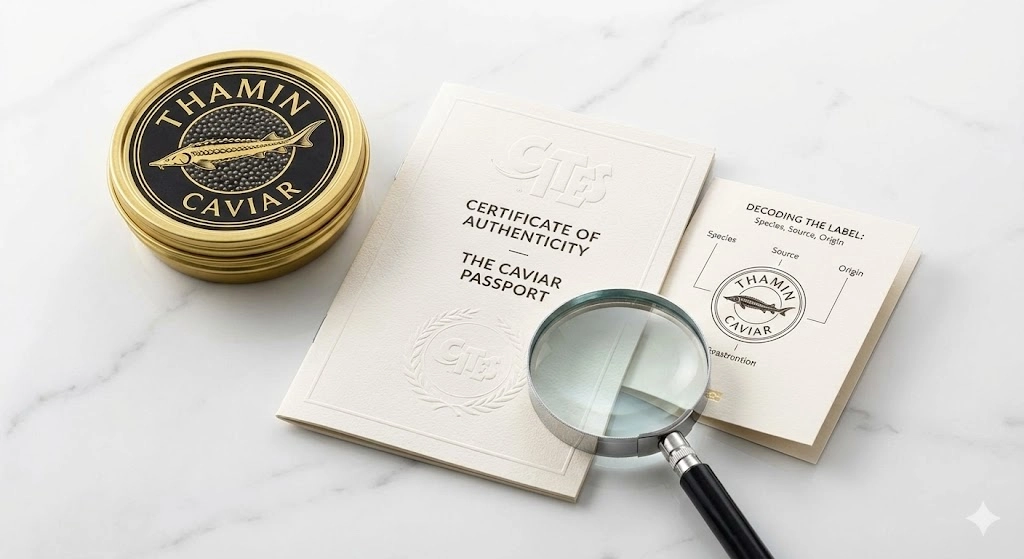
A serious caviar tin should clearly list the species name, origin, and dates. This is not decoration. It is how professionals confirm authenticity and quality.
If you want the fastest verification method, check the CITES code on the label. Common examples include HUS, GUE, and BAE. This is how you avoid “mystery caviar” marketing and confirm the fish behind the roe.
Portion guide how many grams per person
Most people over-serve caviar because the tin looks small. In tasting rooms, we portion by purpose. The right amount depends on whether caviar is the main star or just a luxury accent.
- Tasting portion: 5–10 g per person for first-time tasting or a small canapé.
- Classic serving: 10–15 g per person for blinis, toast points, or a plated starter.
- Luxury serving: 20–30 g per person when caviar is the centerpiece.
- Whole tin rule: A 30 g tin is ideal for 2 people. A 50 g tin fits 3–5 people. A 125 g tin fits 8–12 people, depending on serving style.
Expert tip: if this is a gift for someone new to caviar, smaller tins often create a better experience. You finish it fresh, and the texture stays perfect from first spoon to last.
Serving basics tradition and pairings
The purpose of serving is not to “decorate” caviar. It is to keep it cold and let the natural flavor speak. Traditional service exists for a reason: it protects aroma, texture, and balance.
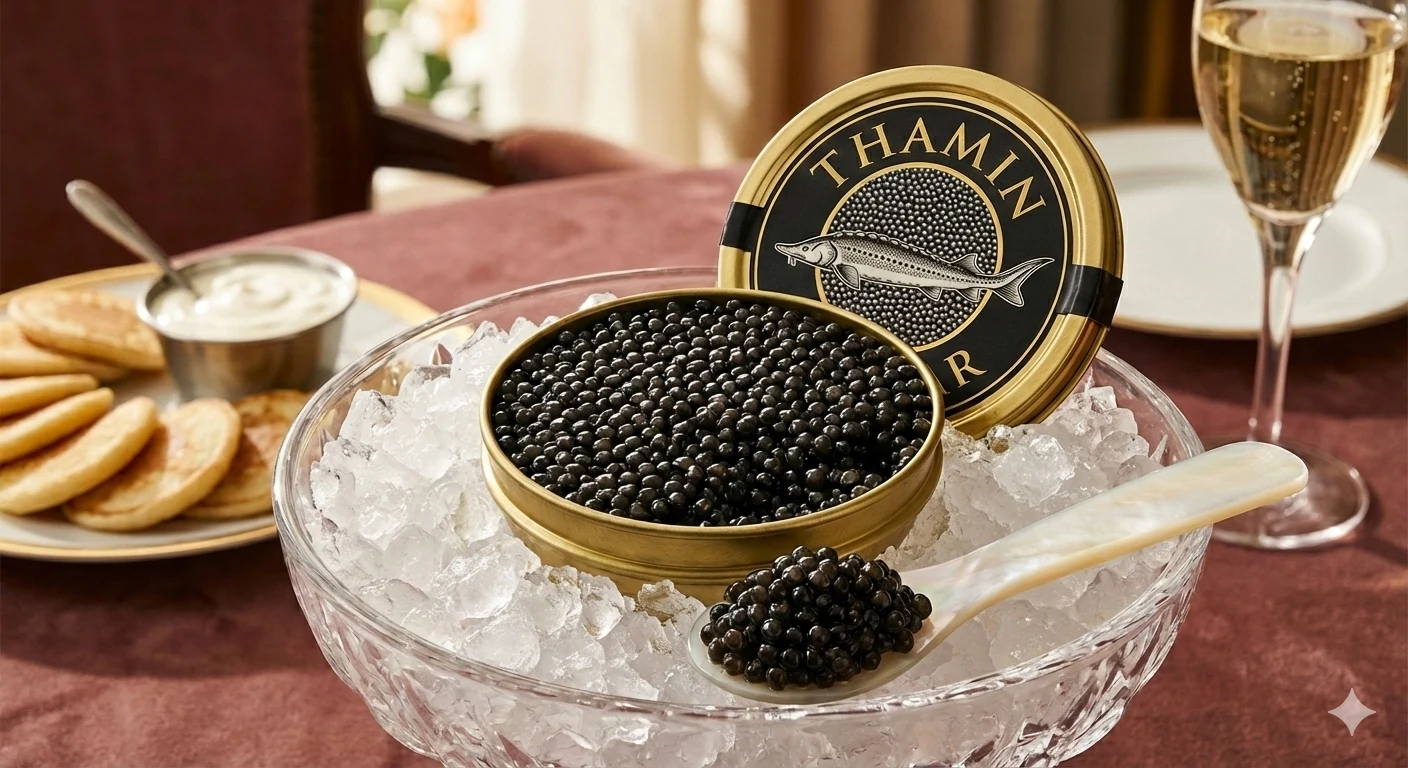
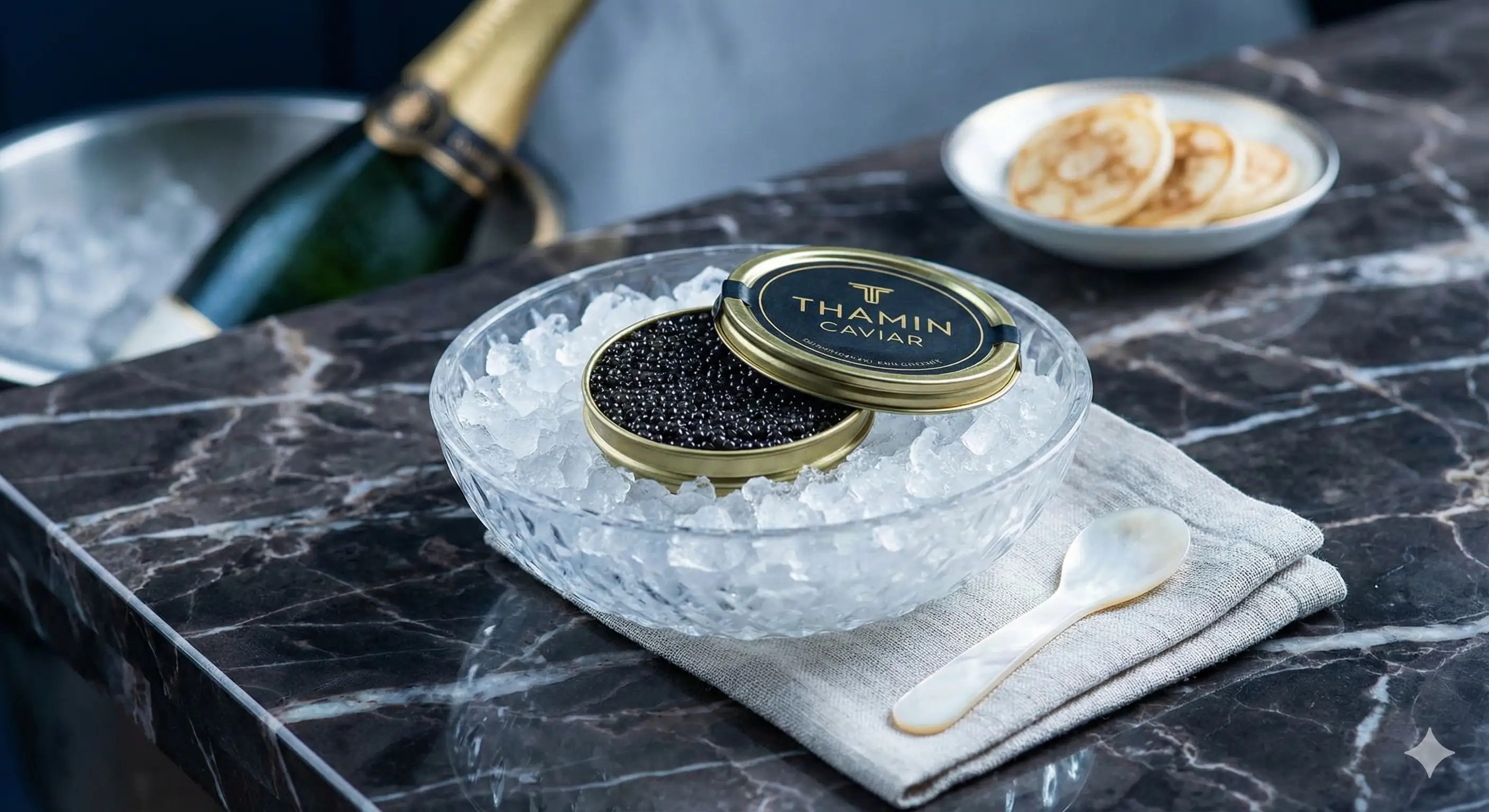
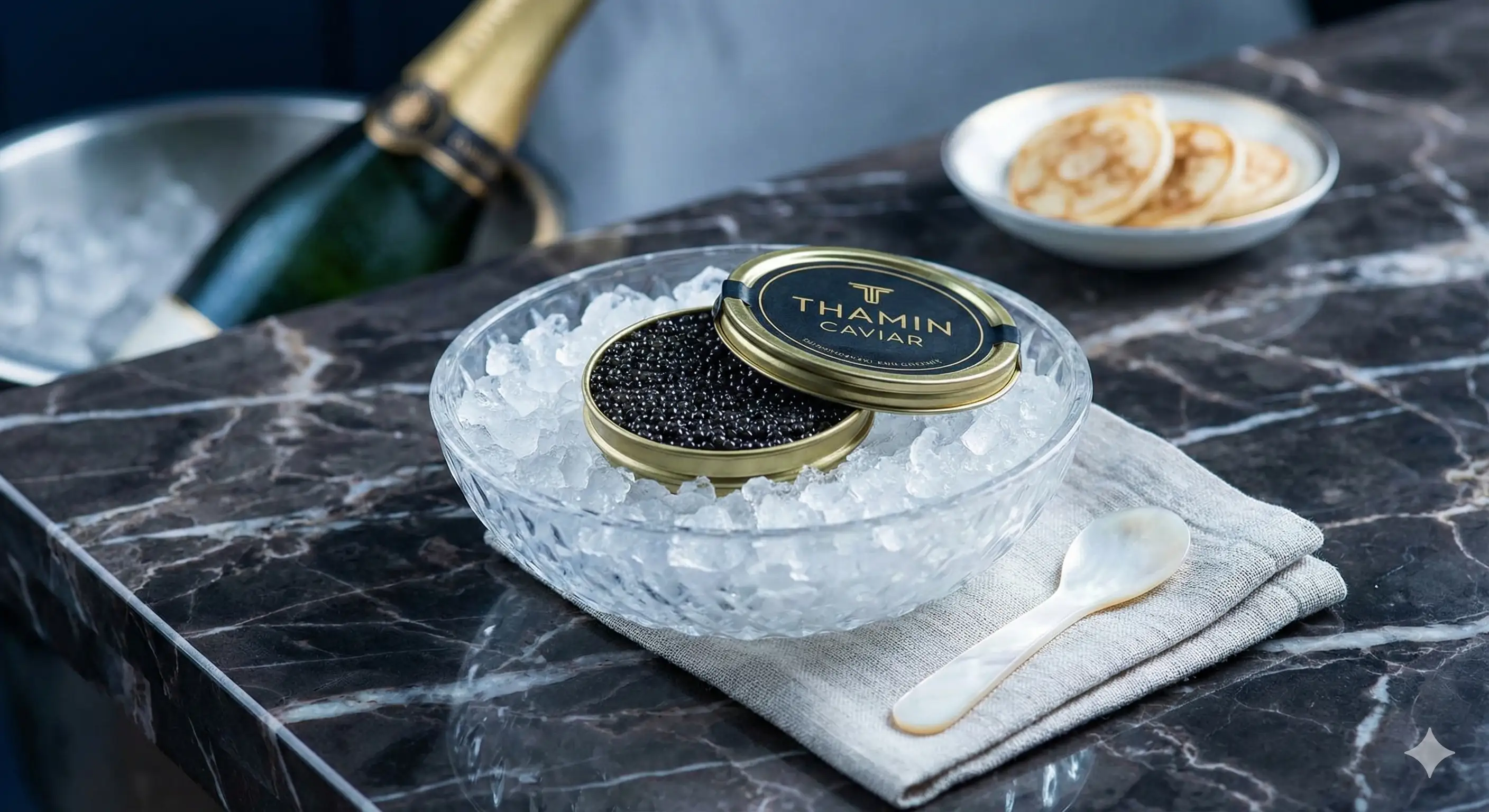
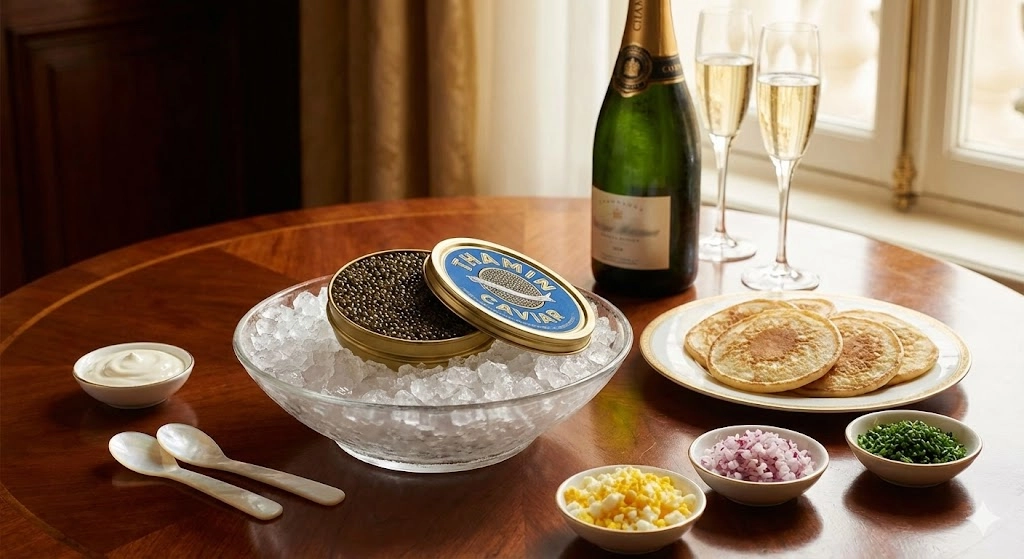
- Keep it cold: Serve the tin on crushed ice and refill ice as it melts.
- Use the right spoon: Mother-of-pearl, horn, glass, wood, or plastic. Avoid metal.
- Classic base: Warm blinis or toast points with a small dot of crème fraîche.
- Clean pairings: Potato, egg, or mild dairy work because they do not fight the brine.
- Drinks: Chilled sparkling wine is common. If you prefer non-alcohol, use ice-cold sparkling water to reset the palate.
Expert tip: avoid lemon directly on the roe. Acid can flatten delicate notes and make the finish feel sharper than it should. If you want brightness, put lemon on the side of the plate, not on the eggs.
Step 4 When you are ready to serve
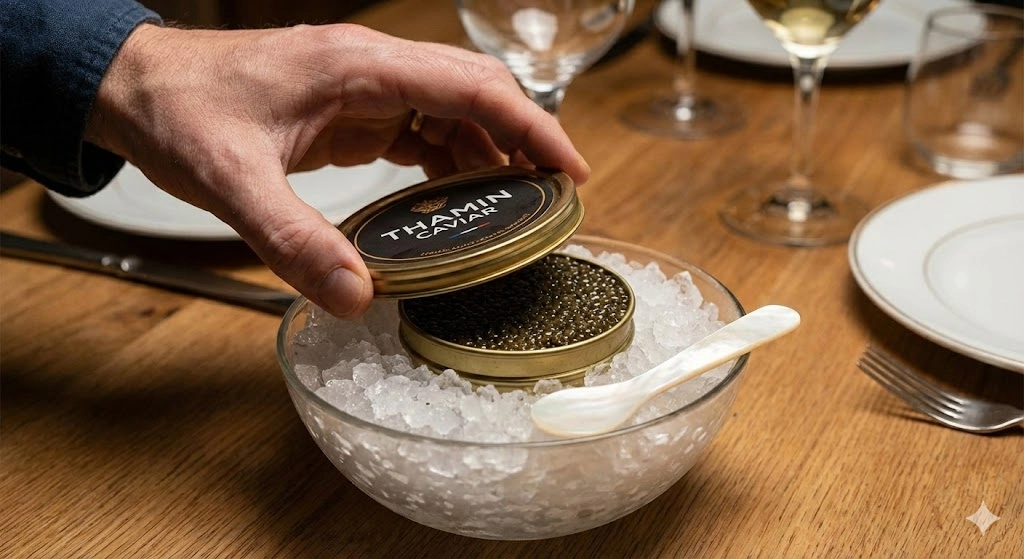
The cleanest flavor comes when the tin is opened cold and served immediately. In caviar houses, we open tins only at the moment of service for one reason: oxygen changes aroma fast.
- Chill first. Serve straight from the fridge, then keep the tin on crushed ice.
- No metal spoons. Use mother-of-pearl, horn, glass, wood, or plastic.
- Keep it simple. Avoid heavy garnish if you want the true taste.
- Never cook it. Heat damages the egg membrane and destroys aroma.
The two hour rule for leaving caviar out
Parties ruin caviar more than fridges do. In warm climates, time at room temperature matters even more. This is the safety cut-off used by food professionals.
- 0 to 1 hour: Usually safe. Return to fridge or keep on ice.
- 1 to 2 hours: Quality drops fast. Eat now and do not re-store.
- Over 2 hours: Discard for safety.
After opening how to store leftovers
Once opened, oxygen turns fats rancid and bacteria can enter from spoons. Treat opened caviar like highly perishable seafood. The best practice is to open only what you plan to finish.
- Best practice: Finish the tin the same day.
- Maximum: 24–48 hours for premium fresh caviar if kept at 0–3°C.
- Cling film barrier: Press plastic wrap gently onto the eggs before closing the lid. Less oxygen slows oxidation.
- Clean spoon only: No double dipping from bread or other foods.
Red flags how to know if caviar is spoiled
If anything feels wrong, do not gamble. The cost of a new tin is nothing compared to the cost of food poisoning. Professionals rely on a few clear warning signs.
- Bulging tin or loud hiss: Gas buildup from bacterial growth. Discard immediately.
- Smell test: Fresh caviar smells clean, like sea air and butter. If you smell ammonia, sour milk, wet dock, or fish tank, discard.
- Visual test: Deflated eggs, thick white film, or heavy liquid separation are warning signs.
- Texture test: Eggs should be glossy and pop gently. A soupy or broken-down tin means the structure has collapsed and safety may be compromised.
Can you travel with caviar
Travel is possible, but only if you keep the cold chain. Use an insulated cooler bag with gel packs and avoid direct sun. If you are flying, consider smaller tins and professional cooling, because airport rules and storage conditions can be unpredictable.

Bottom line: After you buy caviar, your job is not “storage”. It is cold-chain continuation. Keep it near 0°C, store it flat, open only at serving time, and finish quickly after opening. Do that, and the tin tastes exactly the way it was meant to.