
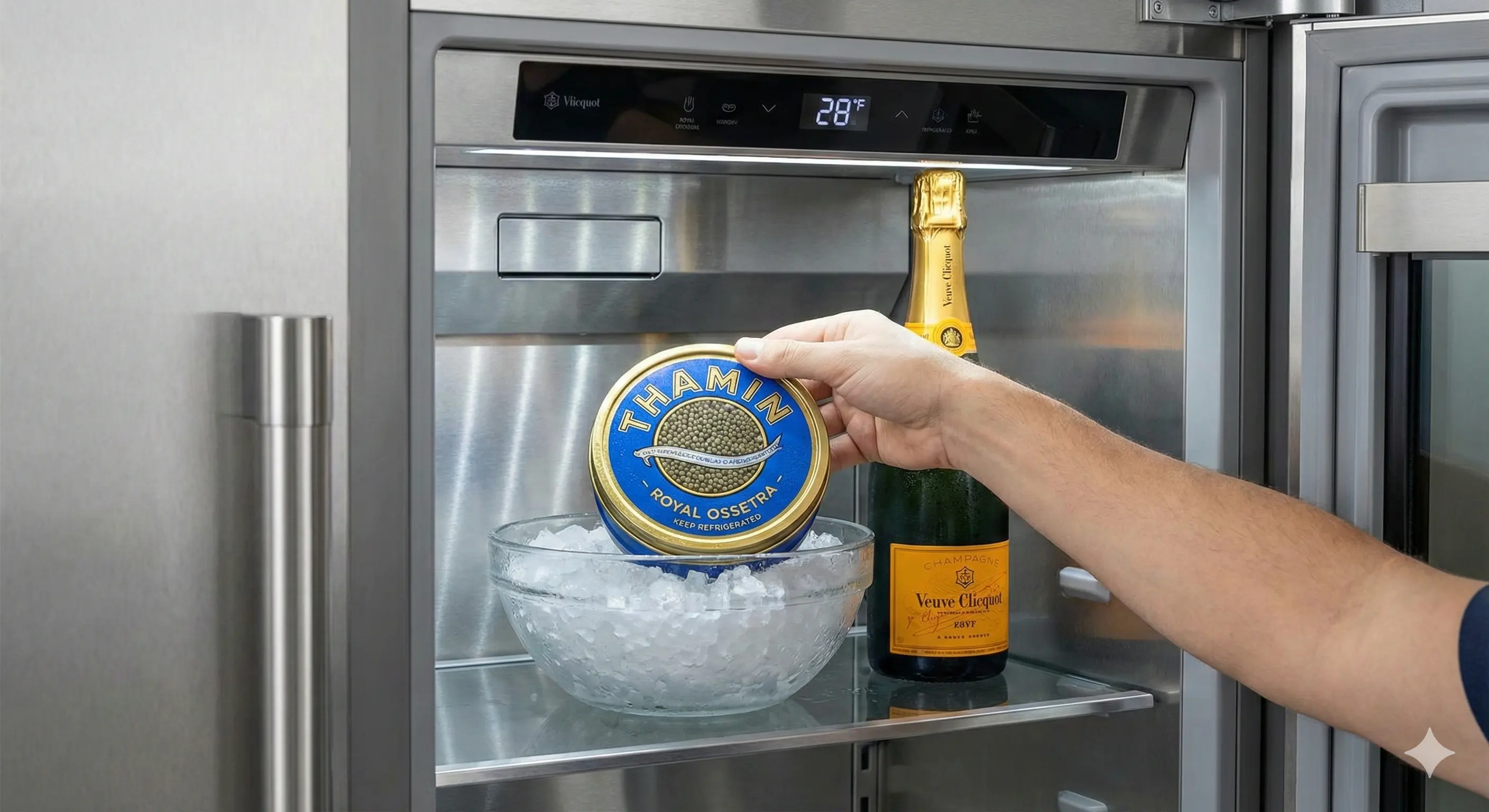
Caviar is a fresh, lightly salted product. It is never cooked, so the way you store it decides how long it stays safe, firm and glossy. Good storage keeps the eggs cold, protected from air and away from big temperature changes.
In short, caviar should be stored like top-quality raw seafood: at 0–3 °C, in a closed tin or jar, in the coldest part of the fridge, and kept out of the fridge only while you are serving it on ice.
This guide explains ideal temperature, how to store unopened tins, what to do after opening, how to serve over ice, how to transport caviar safely, and why freezing is almost never a good idea.
Best Temperature for Storing Caviar
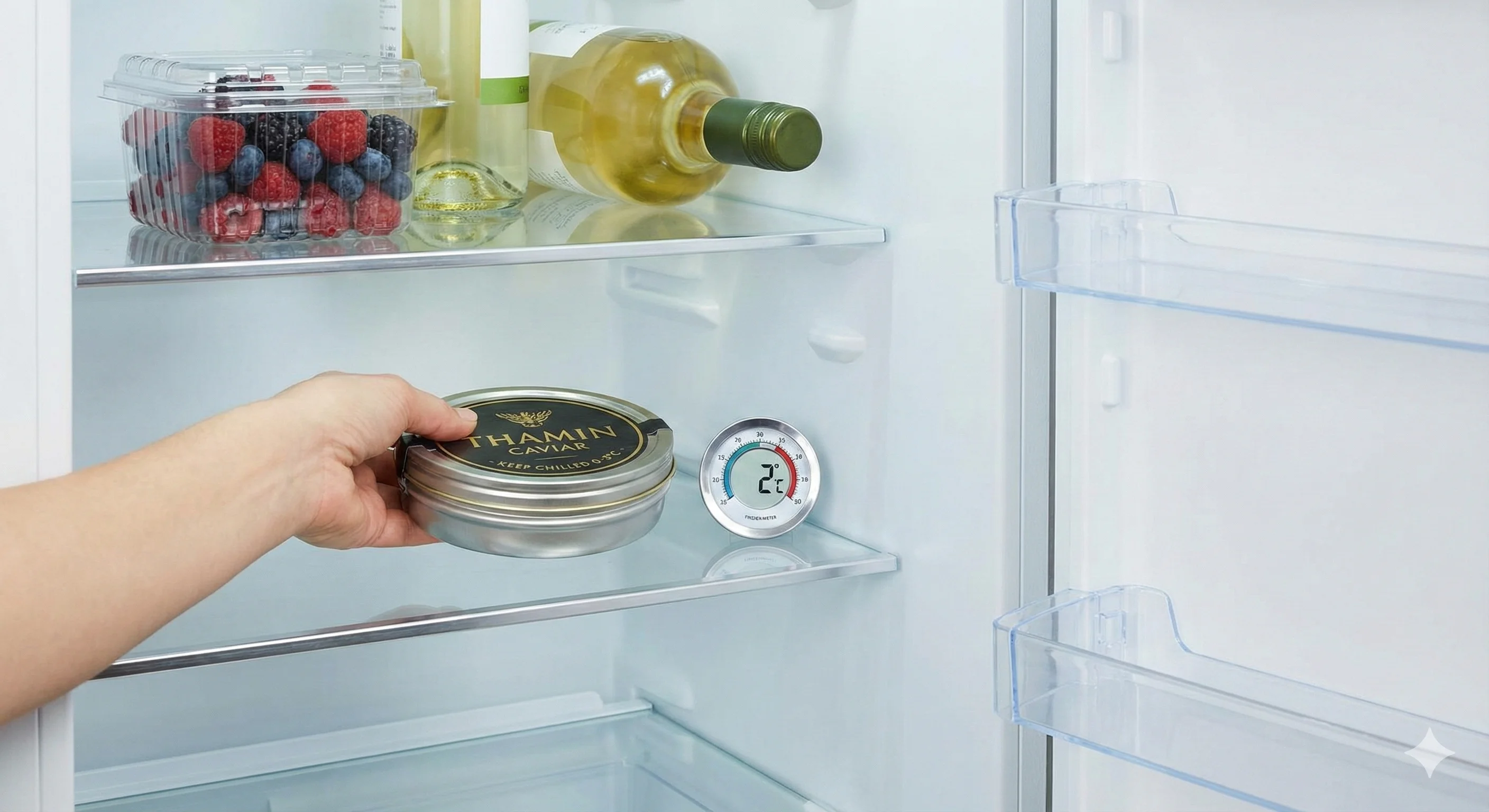
The most important rule for storing caviar is constant low temperature. Professional caviar houses keep their stock between 0–3 °C. In a normal home fridge this is usually the back of the lowest shelf, not the door.
Temperatures above 4–5 °C speed up bacterial growth and oxidation of the delicate fats. On the other side, freezing below 0 °C damages the membrane of each egg and destroys the texture. This is why “very cold but not frozen” is the safe zone.
To check your fridge, use a simple fridge thermometer and move the caviar to the coldest stable area. Avoid shelves that warm up every time the door opens.
How to Store Unopened Caviar Tins
As long as the tin or jar is still sealed and the cold chain has not been broken, caviar keeps its quality for several weeks (or months for pasteurised jars). Your job at home is to continue the same cold, stable conditions.
- Keep unopened tins at 0–3 °C in the coldest part of the fridge.
- Store them horizontal so the eggs sit in an even layer and are not crushed.
- Do not move them in and out of the fridge; every temperature swing shortens shelf life.
- Follow the printed packing date and “best before” date from the producer.
Many chefs place unopened tins inside a small sealed box or bag to protect them from fridge odours and extra moisture. This also helps stabilise the temperature when the fridge door is opened.
How to Store Caviar After Opening
Once you open the tin, air, bacteria from the spoon and warmer room temperature all start to change the product. From this moment, the remaining caviar should be treated as highly perishable seafood.
Use these simple rules after opening:
- Return the tin to the fridge as soon as you finish serving, do not leave it on the table.
- Press a small piece of cling film gently onto the surface of the eggs before closing the lid to push out excess air.
- Make sure the lid is firmly closed and place the tin back in the coldest part of the fridge.
- Use a clean spoon every time to avoid introducing food particles or salt from other dishes.
For best quality, most experts recommend finishing opened premium caviar within 24 hours. In good cold storage it may still be acceptable up to 48 hours, but the texture and aroma will not be at their peak.
| After opening | Storage method | Recommended use time |
|---|---|---|
| Premium fresh caviar | Tin re-sealed with cling film, 0–3 °C | Best within 24 hours, maximum 48 hours |
| Pasteurised caviar in jar | Jar tightly closed, 0–3 °C | Best within 2 days, maximum 3 days |
If caviar has been sitting at room temperature for more than 1–2 hours, it should not go back into storage. At that point, safety and quality are no longer guaranteed.
How to Serve Caviar and Keep It Cold
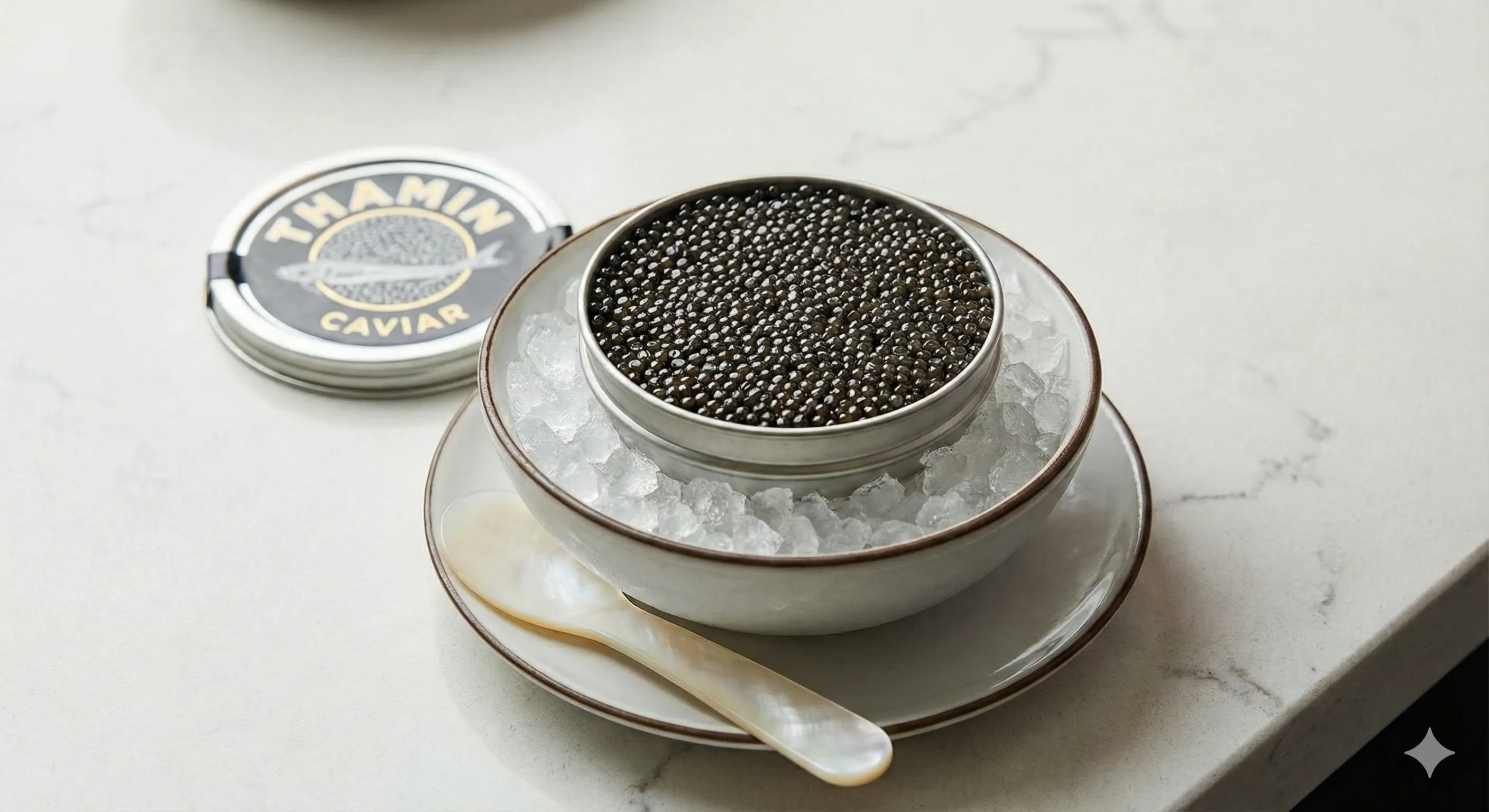
Good service is part of good storage. Caviar should arrive at the table cold and stay cold for the whole time guests are eating it. The classic solution is crushed ice.
- Keep the tin in the fridge until the moment you are ready to serve.
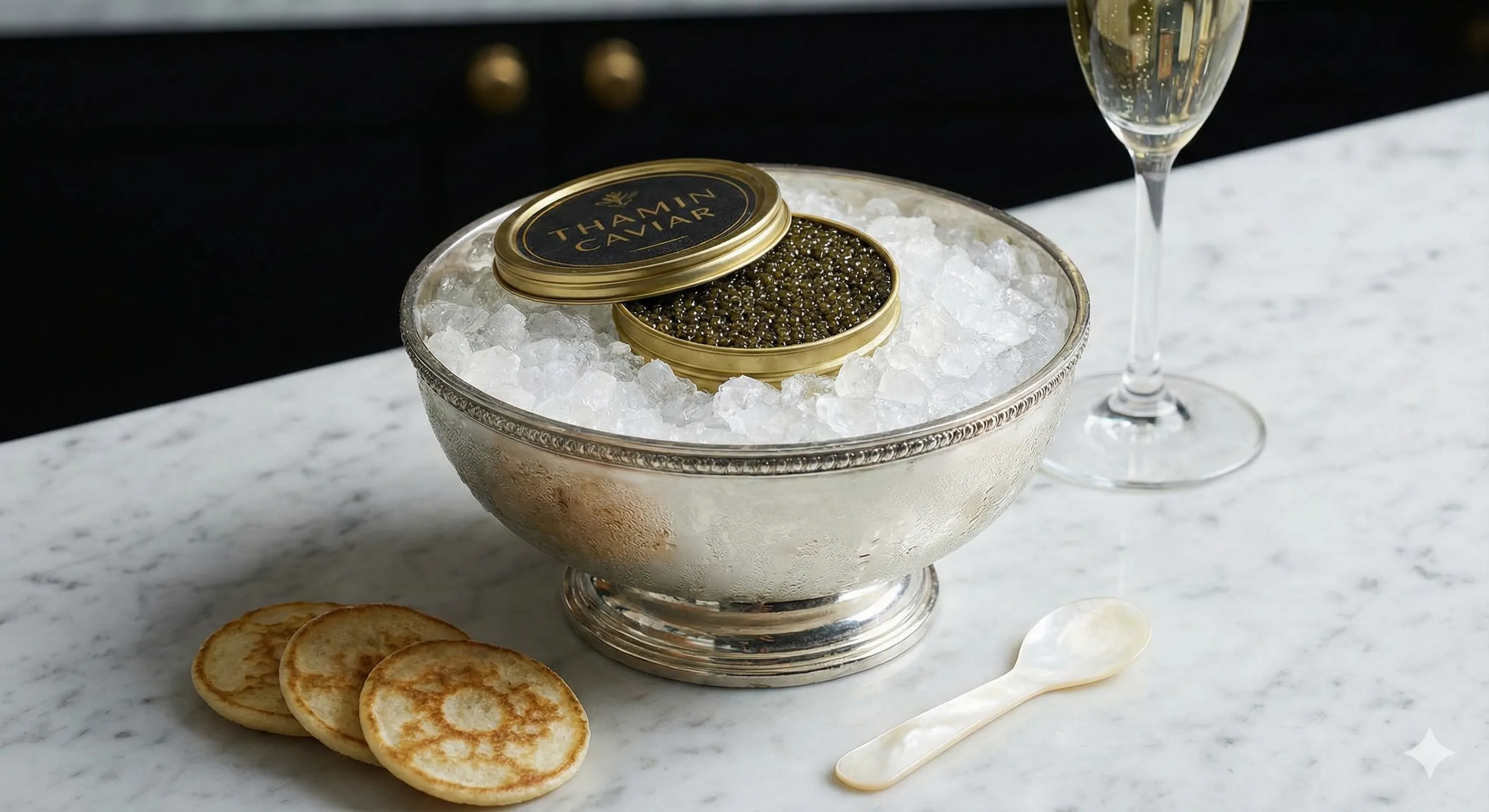
- Place the whole tin or a non-metal bowl of caviar on a bed of crushed ice in a caviar stand or small bowl.
- Use non-metal spoons (mother of pearl, horn, wood or plastic) so the taste does not change.
- Refill the ice if it starts to melt quickly, especially in warm rooms or outdoor events.
If you need to pause service, return the tin to the fridge instead of leaving it on the table. Short cold breaks during a long evening are better than one long period at room temperature.
How to Transport Caviar Safely
Many problems start on the way home, not in the fridge. If caviar becomes warm in the car or during delivery, its remaining life becomes much shorter, even if you chill it again later.
- Use an insulated bag or small cooler with ice packs or gel packs around the tins.
- Keep the package out of direct sun and do not leave it in a hot car.
- Go home directly and put the caviar into the fridge as soon as possible.
- For flights or long trips, ask the supplier for professional cold packaging and always follow airline rules.
If you suspect the caviar was warm for several hours (for example during delayed travel), it is safer to consume it soon and to check smell, colour and texture carefully before serving.
Can You Freeze Caviar?
Technically, caviar can be frozen, but the quality loss is usually large. Ice crystals that form inside each egg break the outer membrane. After thawing, the pearls often become soft, leaky and dull instead of firm and shiny.
Freezing may keep the product microbiologically safe for longer, but it removes the main reason people buy high-grade sturgeon caviar: clean flavour and pleasant texture. For luxury tins, most producers strongly advise not to freeze.
If you ever decide to freeze a lower-grade product:
- Freeze it only in the original sealed tin or jar.
- Freeze once only; do not thaw and refreeze.
- Thaw slowly in the fridge for 24 hours, never at room temperature or in warm water.
- Use it in cooked dishes like sauces or eggs, not for pure tasting from the spoon.
How We Store Caviar Before It Reaches You
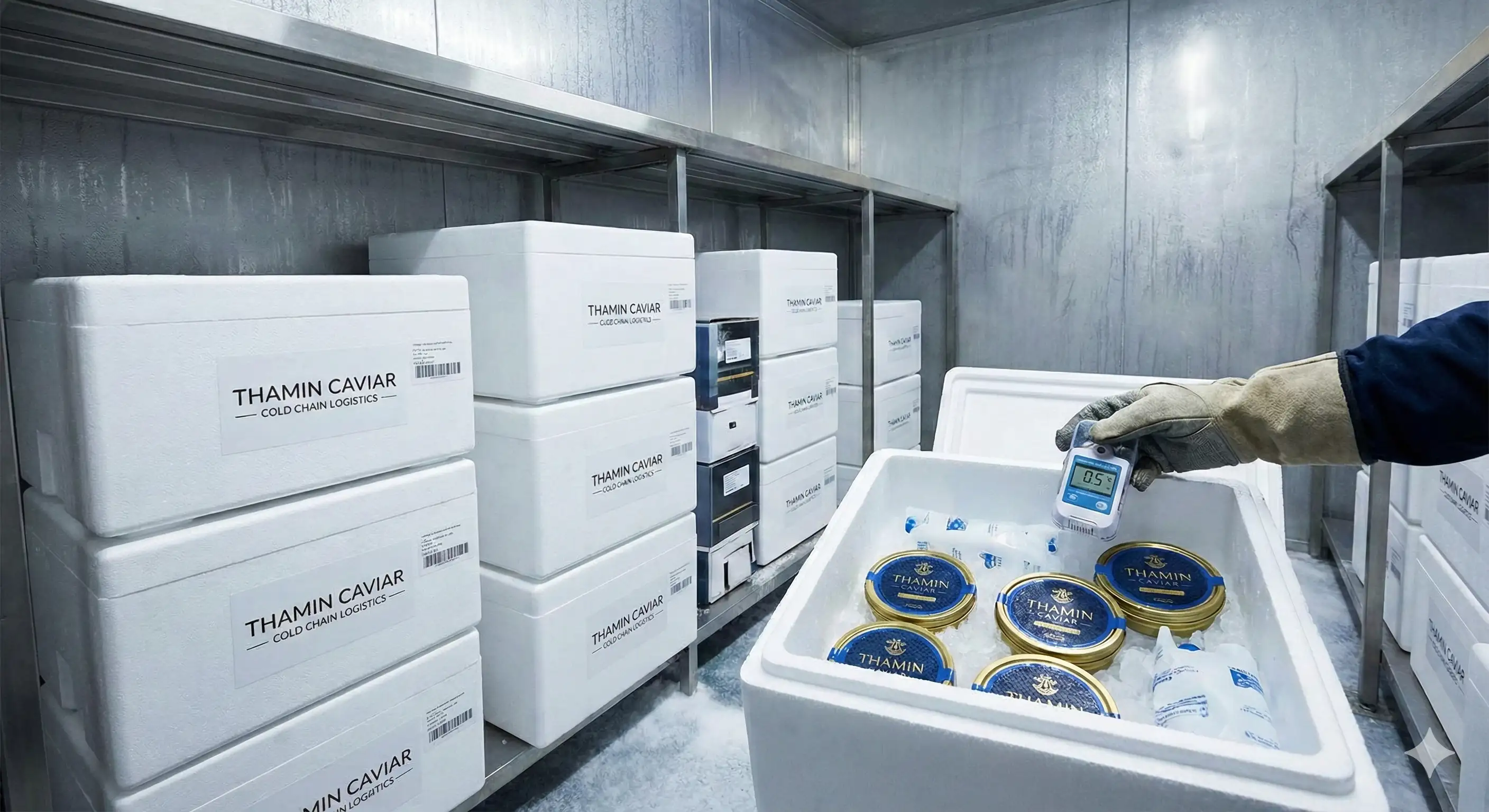
Serious caviar producers and retailers use the same rules on a larger scale. Tins are packed at the farm, sealed, labelled with packing and “best before” dates, and kept in dedicated cold rooms at 0–3 °C with constant temperature monitoring.
During transport, the caviar travels in insulated boxes with ice packs or dry ice so the cold chain is not broken. When it arrives at the shop or restaurant, it goes directly into controlled storage, not onto a normal shelf.
For the customer, this means that most of the “storage work” has already been done. At home you simply continue the same standard: keep it very cold, avoid temperature swings, and finish the tin shortly after opening.
Key Storage Rules to Remember
Proper storage protects both safety and flavour. These are the main points to keep in mind:
- Keep all caviar at 0–3 °C, never at room temperature for long periods.
- Store tins horizontal in the coldest part of the fridge, not in the door.
- After opening, cover the surface with cling film, close the lid firmly and finish the tin within 1–2 days.
- Serve caviar over crushed ice and return it to the fridge when you are done.
- Use insulated bags and ice packs for transport so the cold chain stays unbroken.
- Avoid freezing high-quality sturgeon caviar if you care about texture and taste.
When these rules are followed, caviar can travel from the farm to your table while still tasting clean, fresh and elegant, exactly as it should.