Many people hear the rule “caviar must not touch metal” and assume it is just a luxury habit. It is not. Some metals can trigger fast oxidation and change the taste of the roe in minutes.
This guide explains why metal can ruin caviar, which metals are the real problem, why tins can be metal without damaging the roe, and what you can use at home if you do not own a fancy caviar spoon.
Quick answer: Avoid reactive metals like silver and copper. They can create a bitter metallic note. Safe options are mother-of-pearl, glass, ceramic, plastic, and for short contact only, 18/10 stainless steel or 24k gold.
Why caviar should not touch metal
Caviar eggs contain delicate fats and natural oils. When those oils touch a reactive bare metal, oxidation speeds up at the surface, and the flavour shifts fast.
The “metallic taste” is not subtle. When it happens, it can taste like aluminum foil, like licking a coin, or like a blood-like iron note at the back of the mouth. That clean buttery finish you paid for gets replaced by a sharp, flat aftertaste.
This is why classic service moved to mother-of-pearl, bone, horn, glass, and porcelain long before modern chemistry explained it.
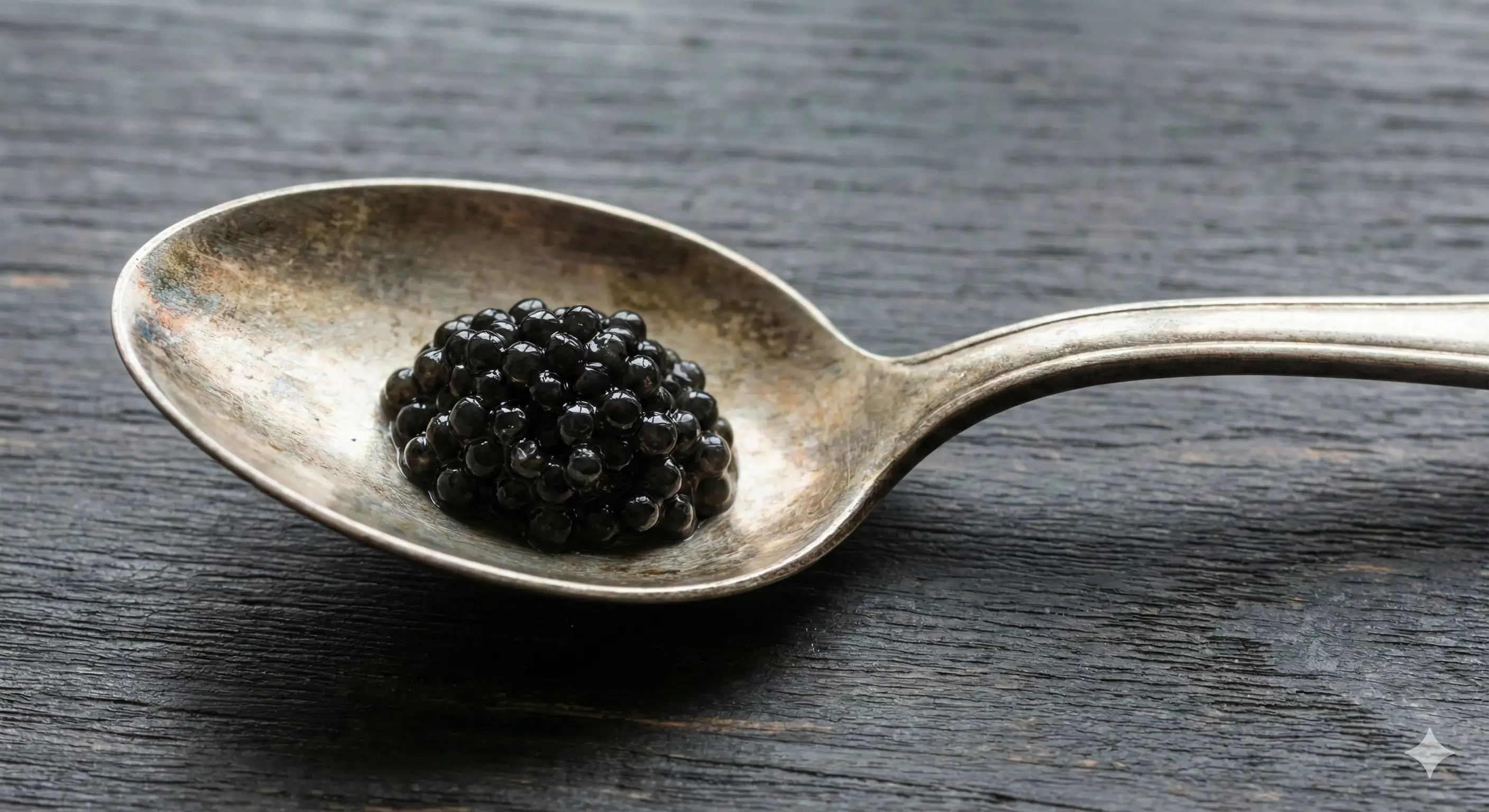
What oxidation does to taste
Reactive metals can accelerate oxidation, especially because caviar is salty and rich in oils. The result is not usually a safety issue, but it is a quality killer.
- Metallic aftertaste that grows stronger the longer it sits
- Flatter flavour, like the caviar is older than it really is
- Less clean finish, more bitterness or harshness
With premium Beluga or Imperial Beluga, the value is the clean, long, creamy finish. Reactive metal contact can destroy that quickly.
If metal is bad, why are caviar tins made of metal
Good question. The key detail is this: caviar tins are coated inside. The roe does not touch raw metal.
Professional tins use a food-safe non-reactive lacquer lining that prevents metal contact and limits oxidation. A silver spoon or copper bowl has no protective lining, so the eggs touch bare metal directly.
Which metals are the worst for caviar
The main problems come from reactive and uncoated metals:
- Silver: beautiful, but reactive with salty fatty food, and can create a metallic edge fast
- Copper and brass: highly reactive, a bad match for caviar
- Aluminum: can transfer a noticeable metallic note
- Cheap or scratched steel: can expose reactive surfaces and create off-flavours
Most “caviar got ruined” stories happen at home or during service, not in the factory. It is usually the spoon, bowl, or serving tray that causes the problem.
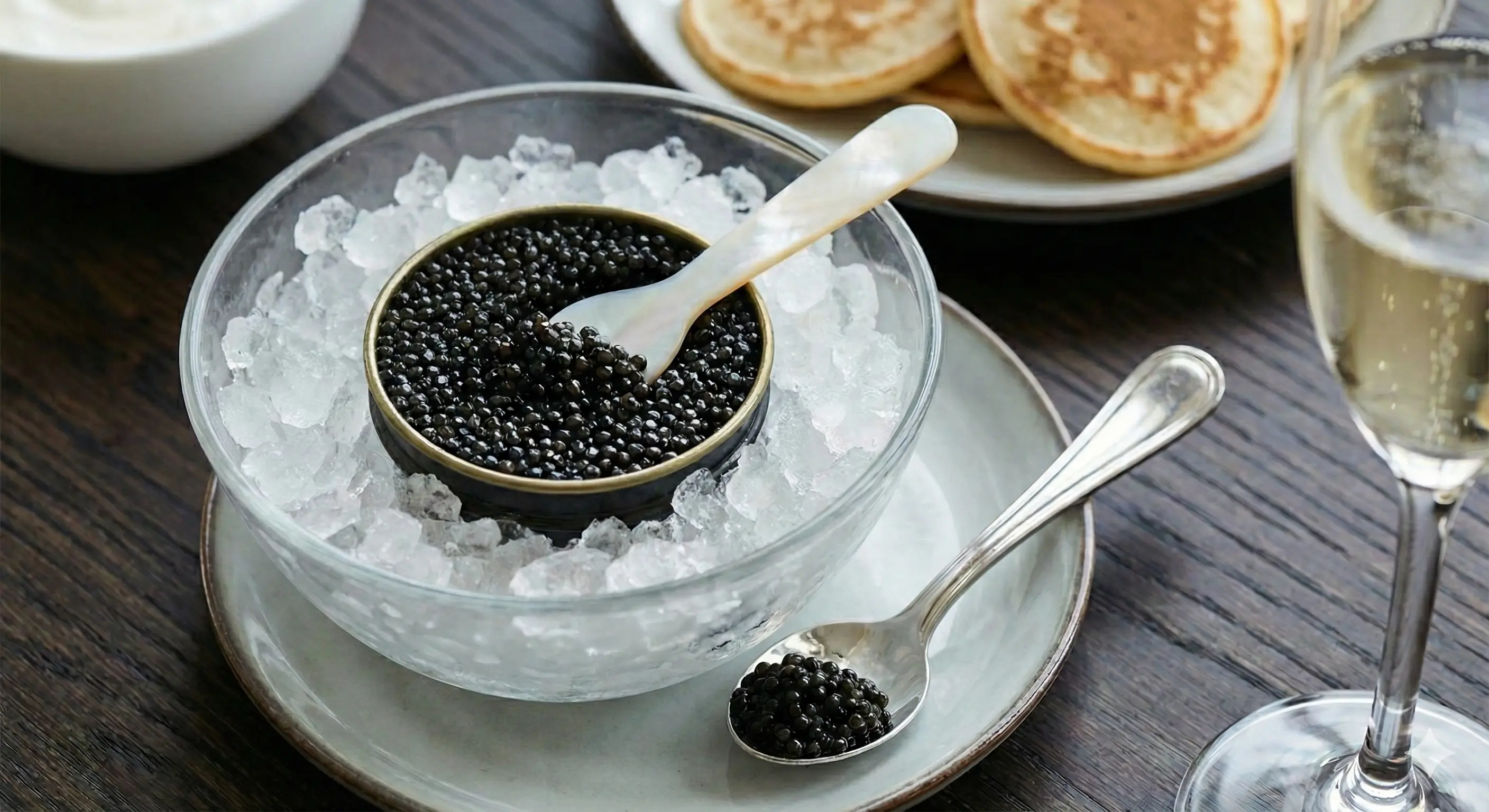
Best materials for serving caviar
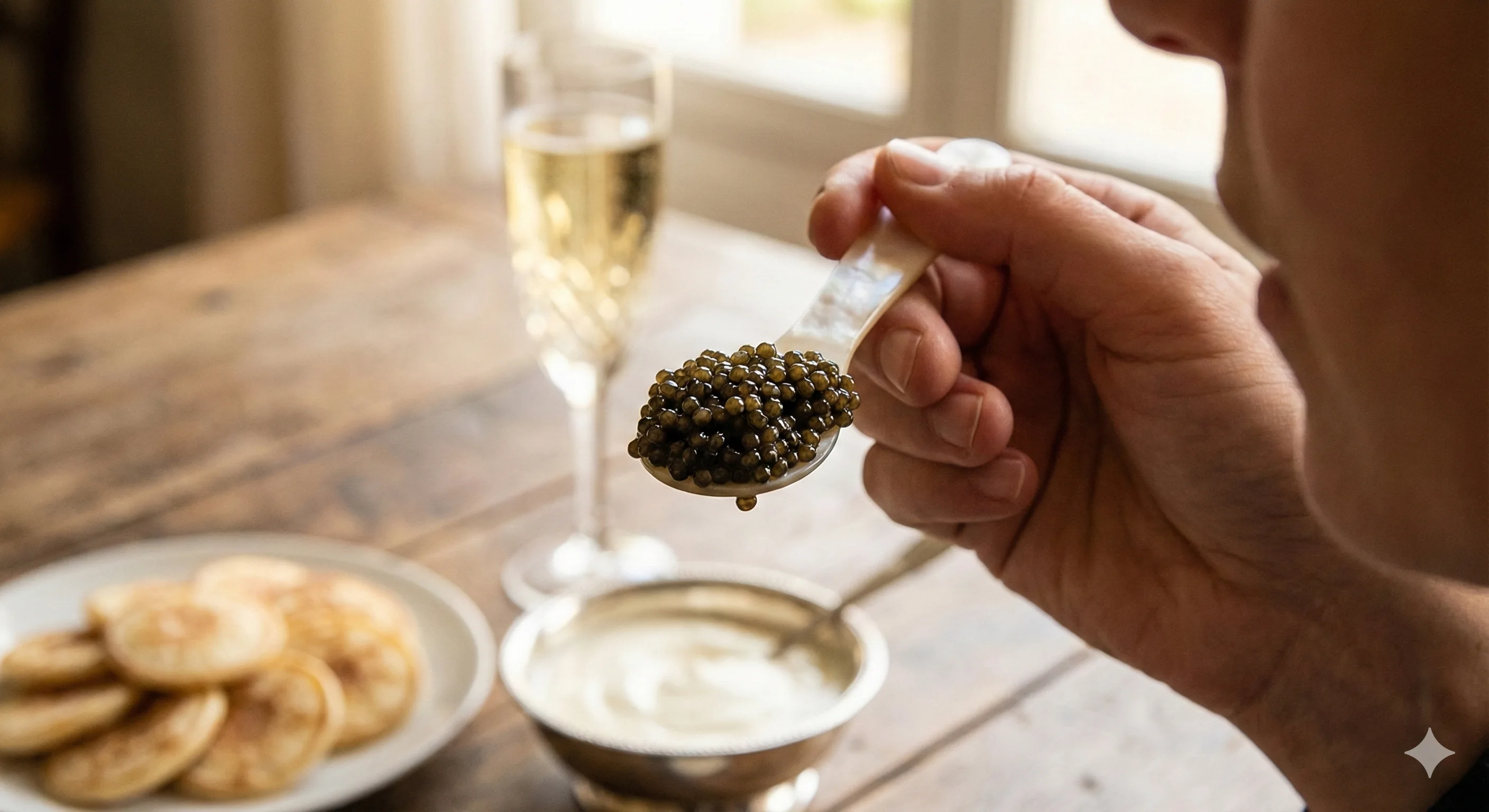
The goal is simple: use inert non-reactive materials so the roe tastes exactly like it should. This is also why top chefs in fine dining kitchens use mother-of-pearl, glass, or gold, not for decoration, but to protect the integrity of the roe.
| Material | Safe for caviar | Notes |
|---|---|---|
| Mother-of-pearl | ✅ Best | Completely inert and ideal for tasting |
| Glass or porcelain | ✅ Safe | Great for bowls and plates |
| Plastic | ✅ Safe | Not fancy, but protects flavour |
| 24k gold | ✅ Safe | Pure gold is inert, safe for contact |
| 18/10 stainless steel | ⚠️ Acceptable | Use only for short contact. Avoid cheap 18/0 steel and scratched utensils. |
| Silver, copper, brass, aluminum | ❌ Avoid | Reactive metals that can add metallic bitterness |
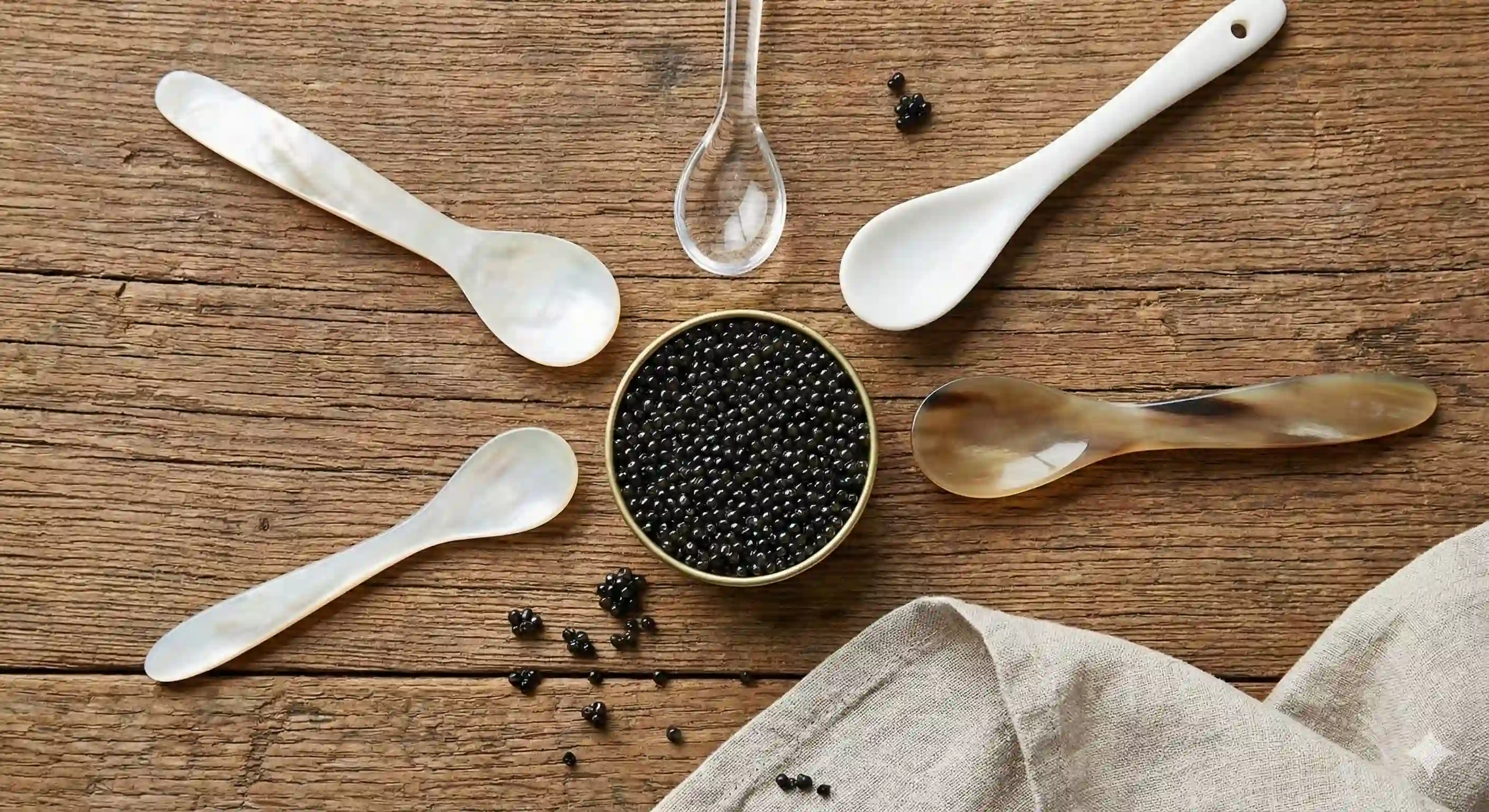
Emergency options if you do not have a caviar spoon
No mother-of-pearl spoon at home? Normal. Use something chemically neutral and move on with your life:
- Plastic tasting spoon
- Wooden coffee stirrer
- Small ceramic spoon
- Glass teaspoon
They are not glamorous, but they protect the flavour better than expensive silverware.
How to serve caviar correctly at home
- Keep the tin in the coldest part of your fridge until serving.
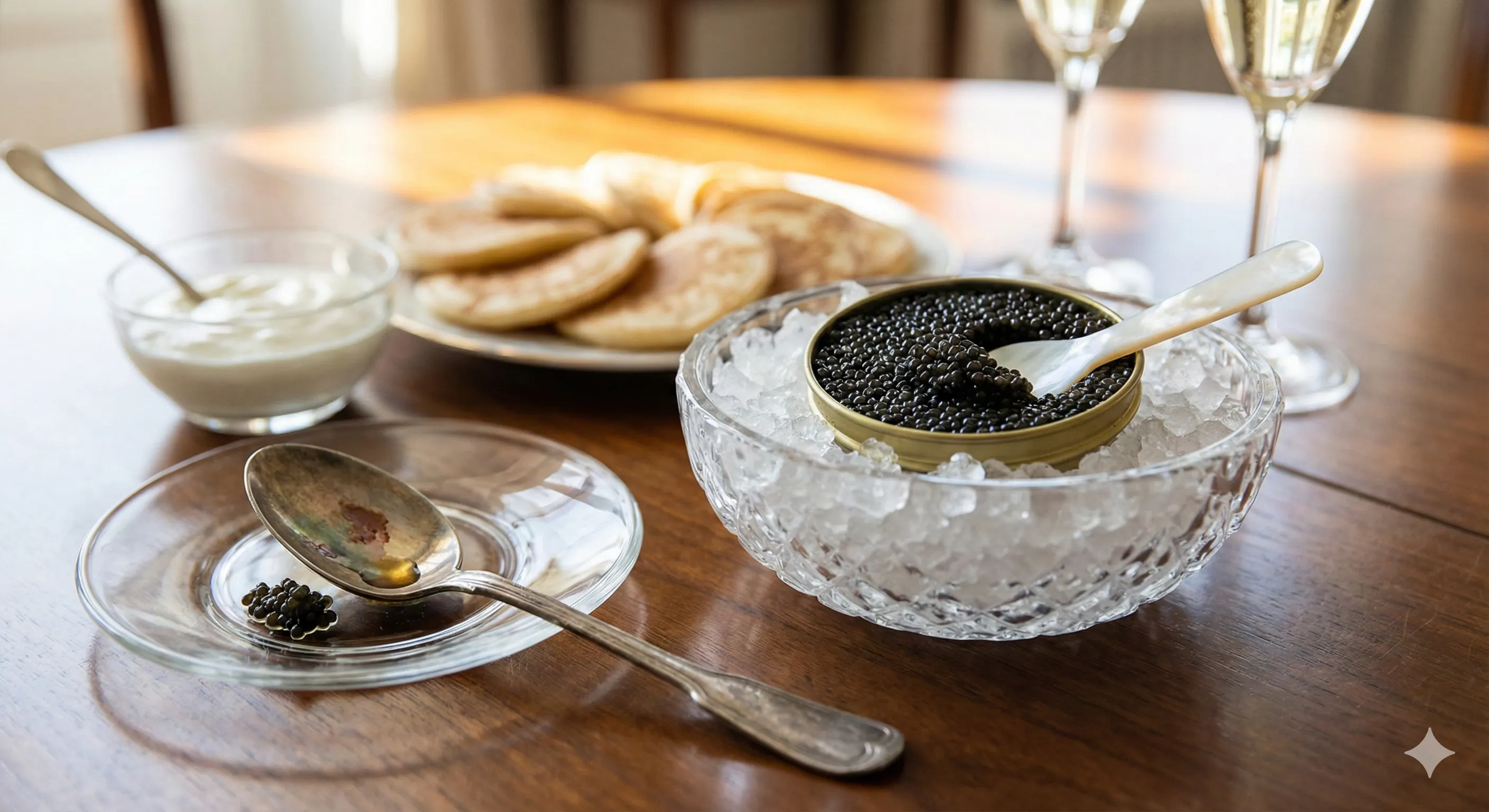
- Serve the tin on a bowl of ice if the room is warm.
- Open just before eating and avoid leaving it exposed for long.
- Use mother-of-pearl, glass, porcelain, plastic, or 18/10 steel briefly.
If you want to compare prices and quality levels, read: caviar price in Oman .
If caviar already touched metal
It is usually still safe to eat, but the top layer may have picked up metallic notes. Scoop off a thin surface layer, move the rest into a glass or porcelain bowl, and switch to a safe spoon.
If the flavour already tastes like coins, that is the lesson. Next time, keep reactive metal away and the tin will taste the way it should.
You can order premium caviar with chilled delivery here: Imperial Beluga caviar .