People ask “How is caviar made?” because they want to understand why one tin tastes clean and buttery, while another tastes salty and looks oily. Real caviar is not “fish eggs in a tin.” It is a cold, controlled process where small mistakes can turn premium roe into soup.
This guide explains the real steps of caviar production and what quality producers watch for at each stage. It also covers the legal and food-safety standards that help prove a tin is legitimate.
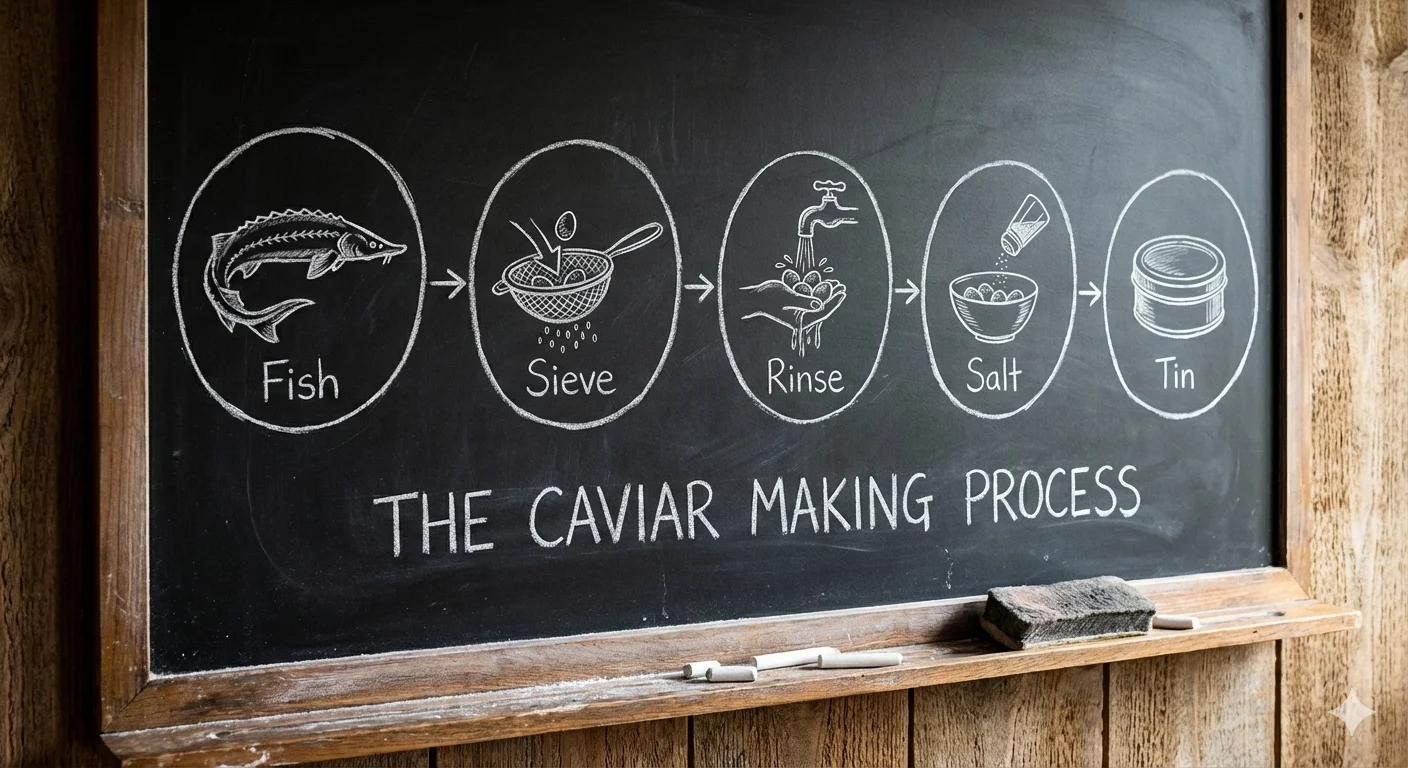
The 6 steps that decide caviar quality are:
- Harvesting: removing mature roe under strict hygiene.
- Sieving: separating eggs without breaking membranes.
- Rinsing: cleaning with very cold water only.
- Grading: sorting by firmness, shine, size, and defects.
- Malossol salting: low salt for preservation and flavour.
- Packaging and maturation: ageing in cold storage before shipment.
What caviar is really made of
True caviar is the unfertilised roe of sturgeon. The ingredients are simple: sturgeon roe and a small amount of salt. Everything else that matters is technique, temperature, time, and legality.
How farmed sturgeon are prepared for caviar
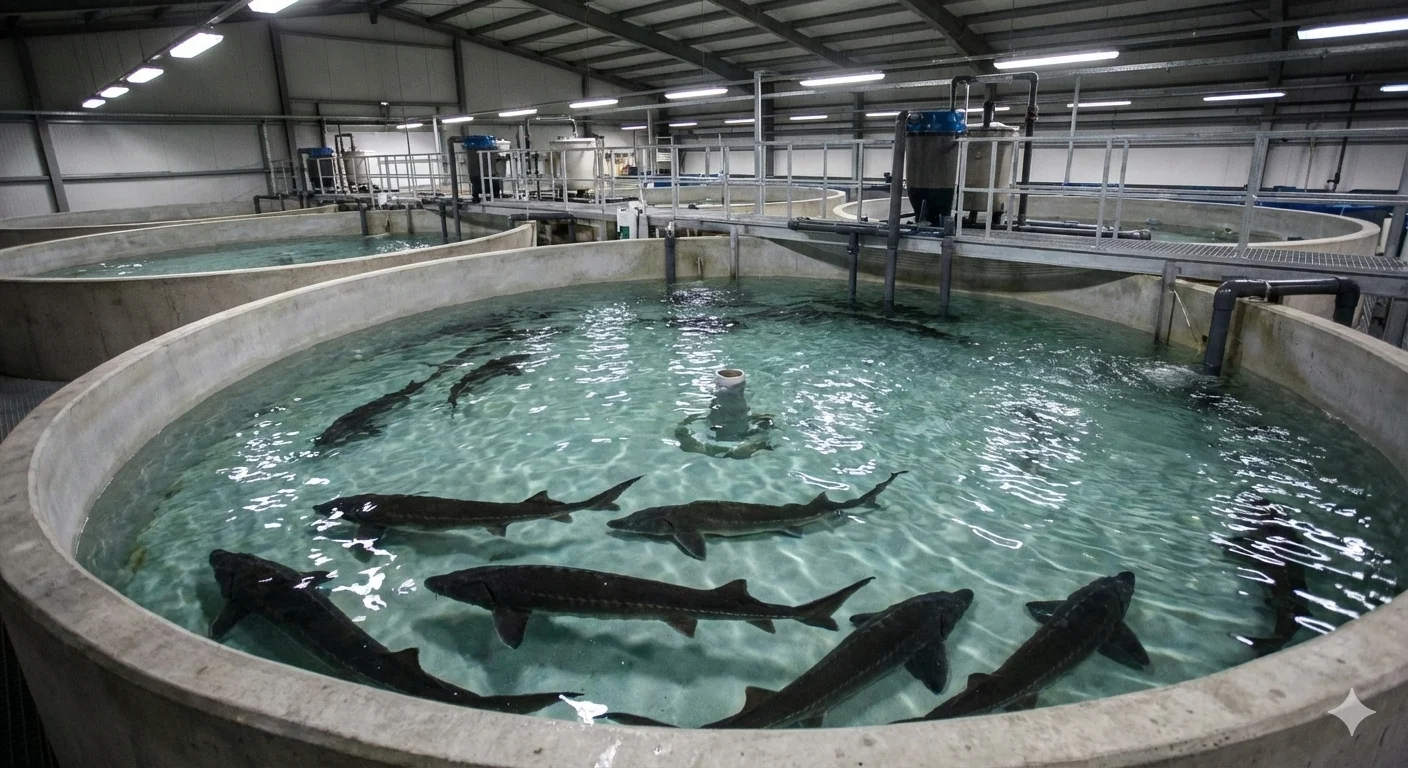
Modern premium caviar usually comes from aquaculture, not wild fishing. Sturgeon are raised in controlled tanks or ponds with monitored oxygen, temperature, and water quality. This is important because stress and poor water conditions can weaken egg texture.
It can take 7 to 15 years before a sturgeon is ready. Many farms use ultrasound checks to confirm maturity. Harvesting too early can produce eggs that are soft and break easily.
Harvesting sturgeon roe
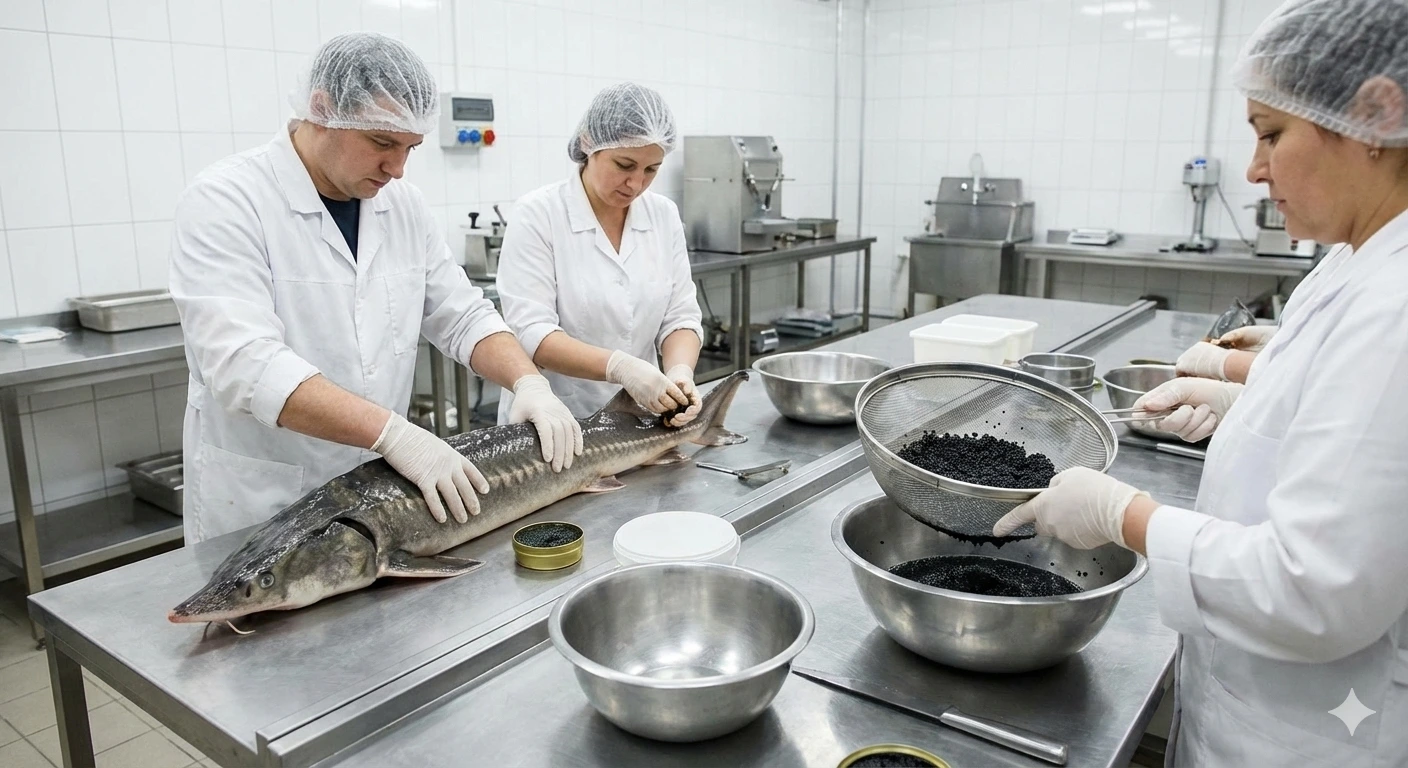
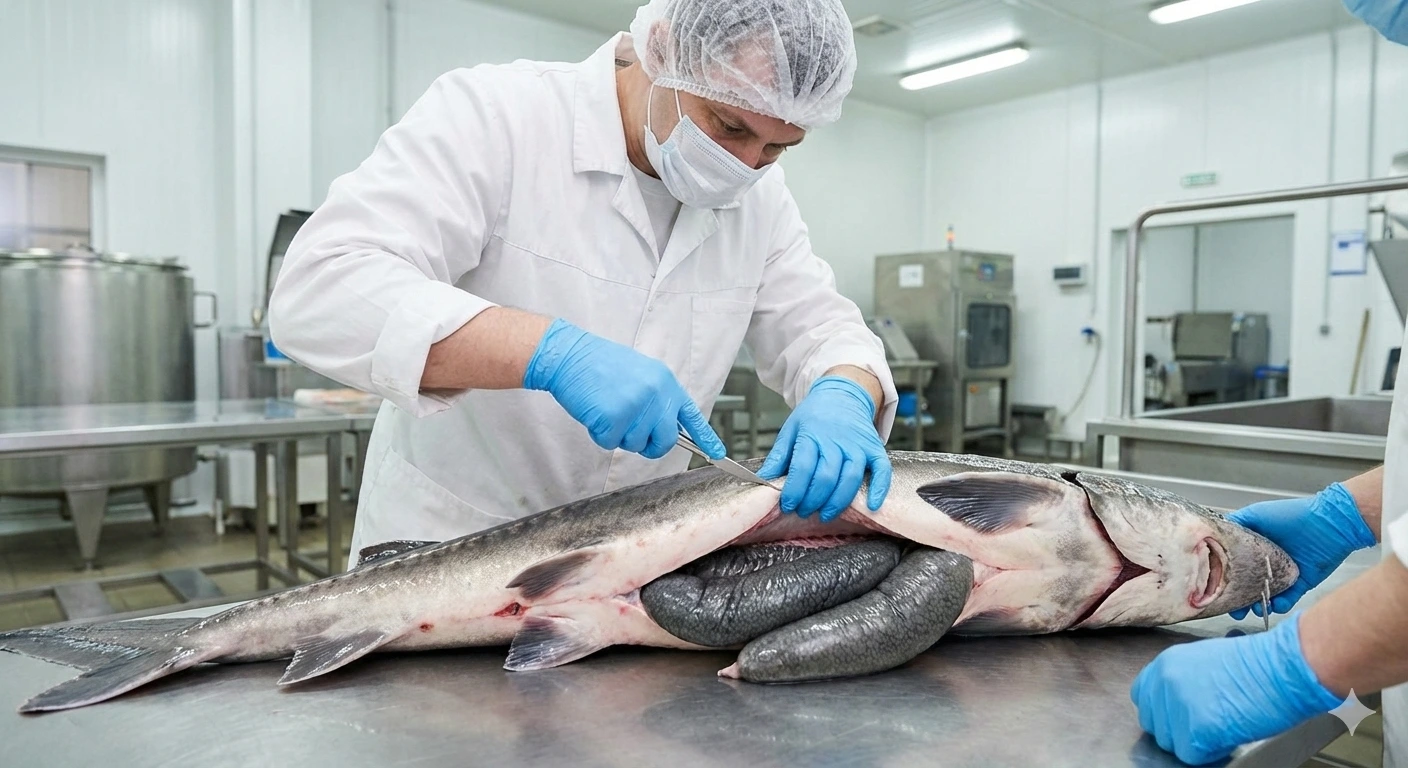
When roe is ready, the fish is processed in a clean production environment and the roe sacs are removed intact. If roe sacs are crushed or handled roughly, eggs break early and the final tin can become wet and mushy.
Serious producers operate under food safety systems such as HACCP (Hazard Analysis Critical Control Point), where hygiene, temperature, and contamination risks are controlled at critical steps.
Does making caviar kill the fish
For classic sturgeon caviar, yes. Traditional production harvests roe at peak maturity. “No-kill” methods exist, but the most consistent texture and flavour for premium tins still comes from traditional harvest.
Sieving and rinsing the eggs
After harvesting, eggs are separated from the membrane through sieving. This step looks simple but it is one of the biggest quality risks in the whole process.
Why rough sieving ruins caviar
If sieving is too aggressive, egg membranes break. Broken eggs leak fat and liquid, creating a wet “soup” texture in the tin. You may also see oil pooling at the bottom, which is a common sign of rough handling.
At Thamin, we look for oil separation during grading. If we see noticeable pooling or an overly wet texture, we reject the batch because it will not deliver the clean pop and firm grains people expect from premium caviar.
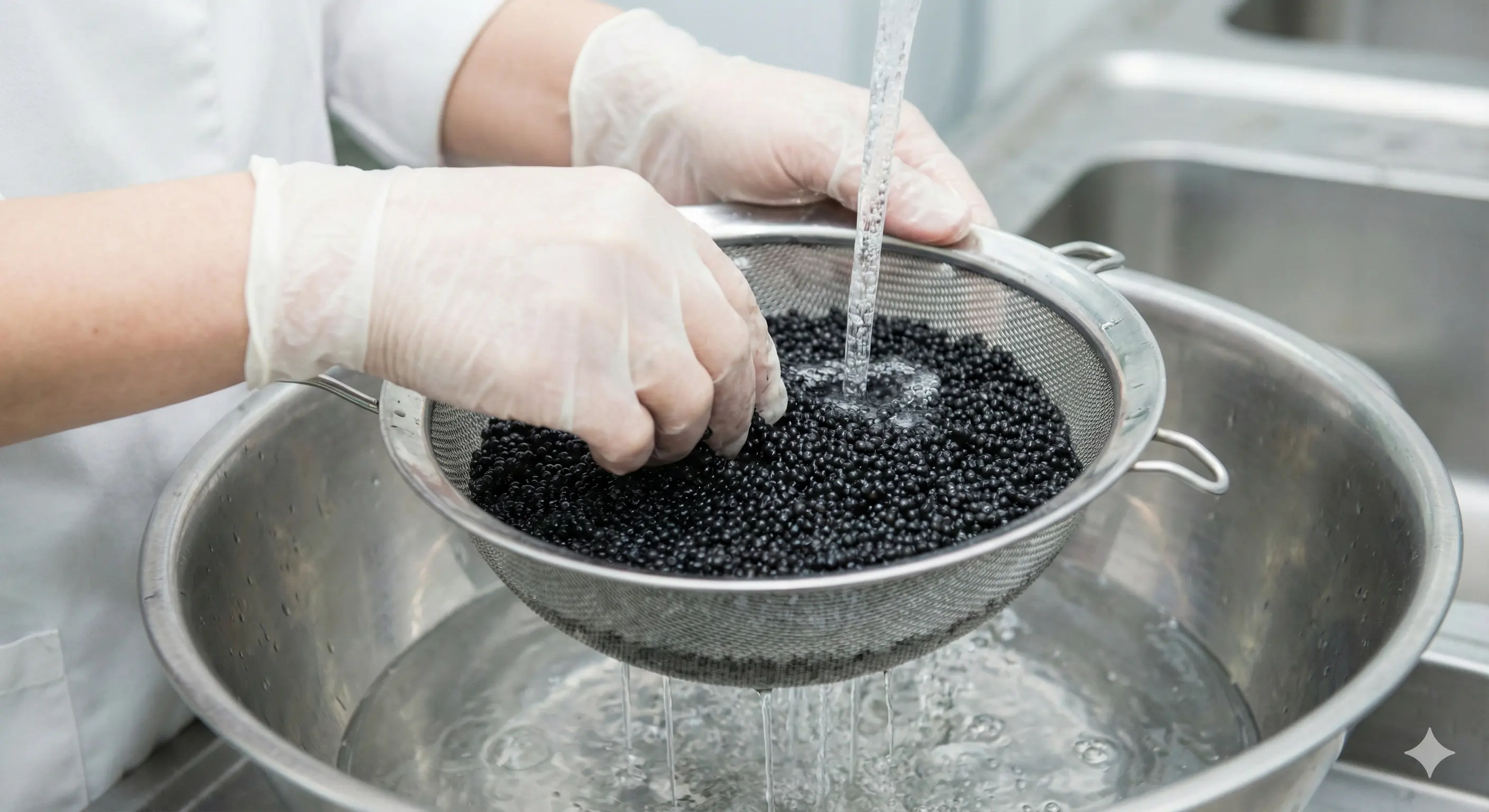
After sieving, eggs are rinsed gently with very cold, purified water to remove blood and tissue.
Why water temperature matters
Warm water can melt fat quickly and soften the egg structure, leading to dull shine and oily mouthfeel. Cold water protects firmness, elasticity, and clean flavour.
The Malossol salting process
Premium sturgeon caviar is usually salted using Malossol, meaning low salt. Typical salt level is around 3 to 5%. The purpose is preservation and flavour development, not heavy saltiness.
How cheap brands use salt to hide problems
Higher salt can mask weak flavour, older roe, or poor handling. This is why some low-quality tins taste sharp and salty immediately.
Expert tip: if the first thing you taste is harsh salt, it is usually not true luxury Malossol. Good Malossol tastes balanced first, then rich, then long on the finish.
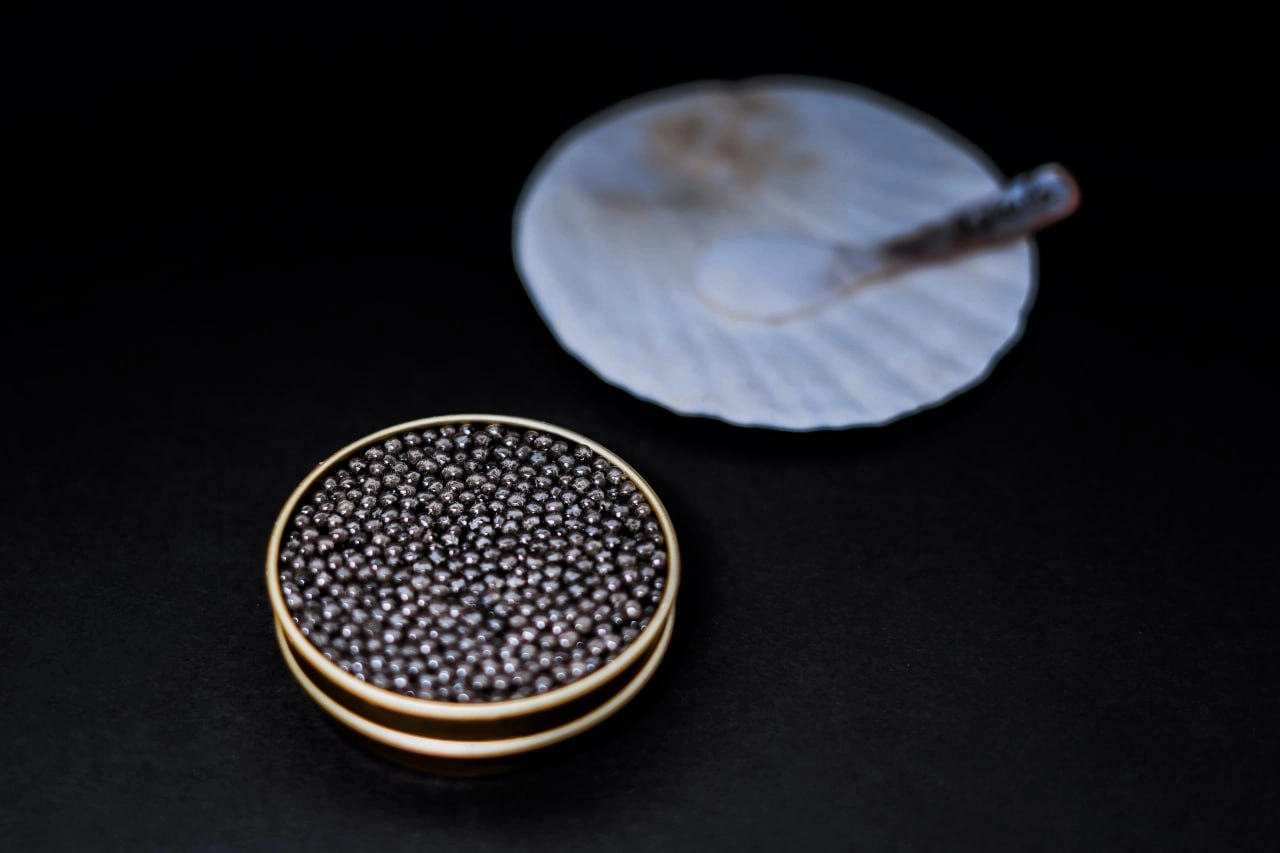
Grading packaging and maturation
After salting, caviar is graded by egg size, colour, shine, firmness, and taste. This is where premium selections are separated from standard batches.
Why maturation changes the flavour
High-quality caviar is usually aged in sealed tins in cold rooms for weeks. During maturation, flavour becomes deeper and more harmonious and texture stabilises. Cheaper caviar is often packed and sold quickly, which can result in flatter flavour and less refined finish.
Cold chain remains critical after packaging. Any break in temperature can soften eggs, increase oil separation, and shorten shelf life.
How to know caviar is legal and authentic
Sturgeon trade is regulated internationally. Legitimate tins should have clear origin and traceability. The key global reference is CITES (Convention on International Trade in Endangered Species), which controls legal sturgeon products in trade.
- Clear origin and producer details
- Proper labelling and traceability
- Clean smell, not strong fishy odor
- Even eggs, not mushy, not broken
- Cold chain delivery and insulated packaging
Try Imperial Beluga in Oman
If you want premium caviar handled correctly from storage to delivery, you can order from Thamin Caviar. We store caviar under strict chilled conditions and deliver it in insulated packaging so it arrives ready to serve.