Let’s be honest: if you’ve never tried caviar, you’re probably a little nervous. You might be thinking: "Is it going to taste like a mouthful of salt? Will it be slimy? Will it taste fishy? What if it’s spoiled?"
I hear this question constantly in Muscat. Here is the truth in plain words: real caviar should smell clean, like sea mist, oysters, or fresh ocean air. It should not smell like an old fish market, a wet dock, a fish tank, or anything sharp like ammonia.
Good sturgeon caviar tastes like the ocean in a refined way: clean brine, then a soft pop, then a buttery finish. Bad caviar announces itself fast with harsh smell, sour notes, or ugly textures.
The 3 Stages of Taste (What Happens in Your Mouth)
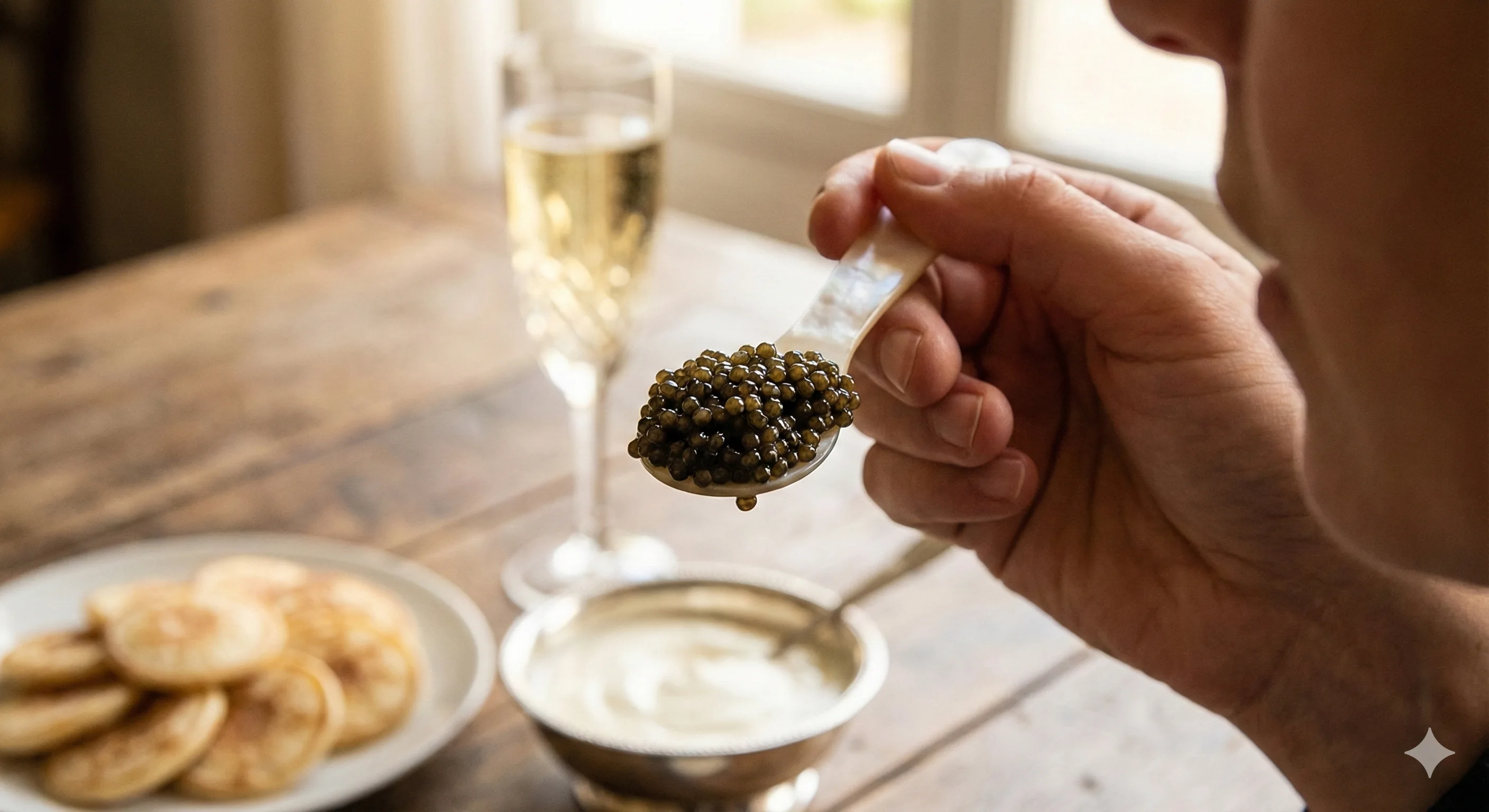
When you eat a spoon of caviar, don’t just swallow it. A good caviar takes you on a short sensory journey. Here is exactly what you should notice:
1. The "Malossol" Kiss (Second 1)
The first hit is a gentle, clean salt wave. Think sea breeze, not table salt.
If the first impression is sharp, aggressive salt, or “burning” on the tongue, that’s a quality warning.
2. The "Pop" (Second 2)
Push the pearls against the roof of your mouth with your tongue.
They should resist slightly, then pop.
That pop is the membrane doing its job.
3. The Buttery Finish (Second 3)
After the pop, the oils spread across your palate. Good caviar finishes creamy, savory, and long.
Many people describe it like fresh cream, toasted nuts, or a clean oyster-like richness.
Important nuance (so you don’t panic): “Ocean smell” is normal. “Old fish market smell” is not.
Texture Red Flags (What experts watch for)
Beginners focus on flavor. Experts also watch texture, because texture tells you how it was handled. Here are the most common “bad signs”:
- Gummy / rubbery eggs: hard to pop, chewy, weird bounce. Often linked to pasteurization, overheating, or poor processing.
- Soupy / oily tin: eggs swimming in liquid or oil pooling at the bottom. This usually means membranes broke down (rough handling, temperature abuse, or old stock).
- Sticky clumps: eggs not separating cleanly. Often a storage or temperature issue.
- Deflated eggs: pearls look collapsed instead of round and glossy. Usually a freshness problem.
Beluga vs. Ossetra vs. Sevruga: what changes and why
Different sturgeon species produce different fat levels and shell structures, so the experience changes a lot. The “why” matters because it explains the taste, not just the marketing.
Beluga: "The Butter Bomb"
Why it tastes buttery: Beluga is known for higher natural fat content compared to other classic sturgeon,
which is why it feels creamy and melts more than it pops.
Tastes like: heavy cream, soft brine, and a long smooth finish.
Texture: very soft, “melt” style.
Best for: first-timers who want the gentlest, least aggressive caviar experience.
Ossetra: "The Nutty One"
Why it tastes complex: Ossetra typically has a firmer shell and a more structured “pop,” which makes
the flavor feel layered as it releases.
Tastes like: toasted walnut or hazelnut notes with clean brine.
Texture: firmer pop than Beluga.
Best for: people who love aged cheese, fine olive oil, and complex flavors.
Sevruga: "The Ocean Punch"
Why it tastes sharper: Sevruga is generally leaner and more mineral-forward, so the briny “ocean punch”
feels brighter and more intense.
Tastes like: crisp sea minerals and bold brine.
Texture: smaller eggs, noticeable pop.
Best for: experienced seafood lovers who want strong flavor.
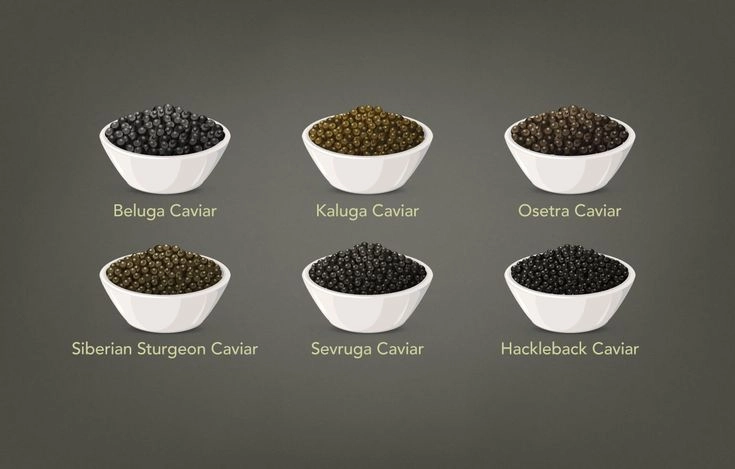
Quick Comparison: Caviar Taste & Intensity
| Caviar Type | Primary Flavor | Texture | Intensity |
|---|---|---|---|
| Beluga | Buttery & Creamy | Soft Melt | Low (Mild) |
| Ossetra | Nutty & Layered | Firm Pop | Medium |
| Sevruga | Briny & Mineral | Small Pop | High (Bold) |
How to Eat It (Without Ruining It)
You can buy the best tin on earth and still ruin the experience in 5 seconds if you do these two things wrong.
-
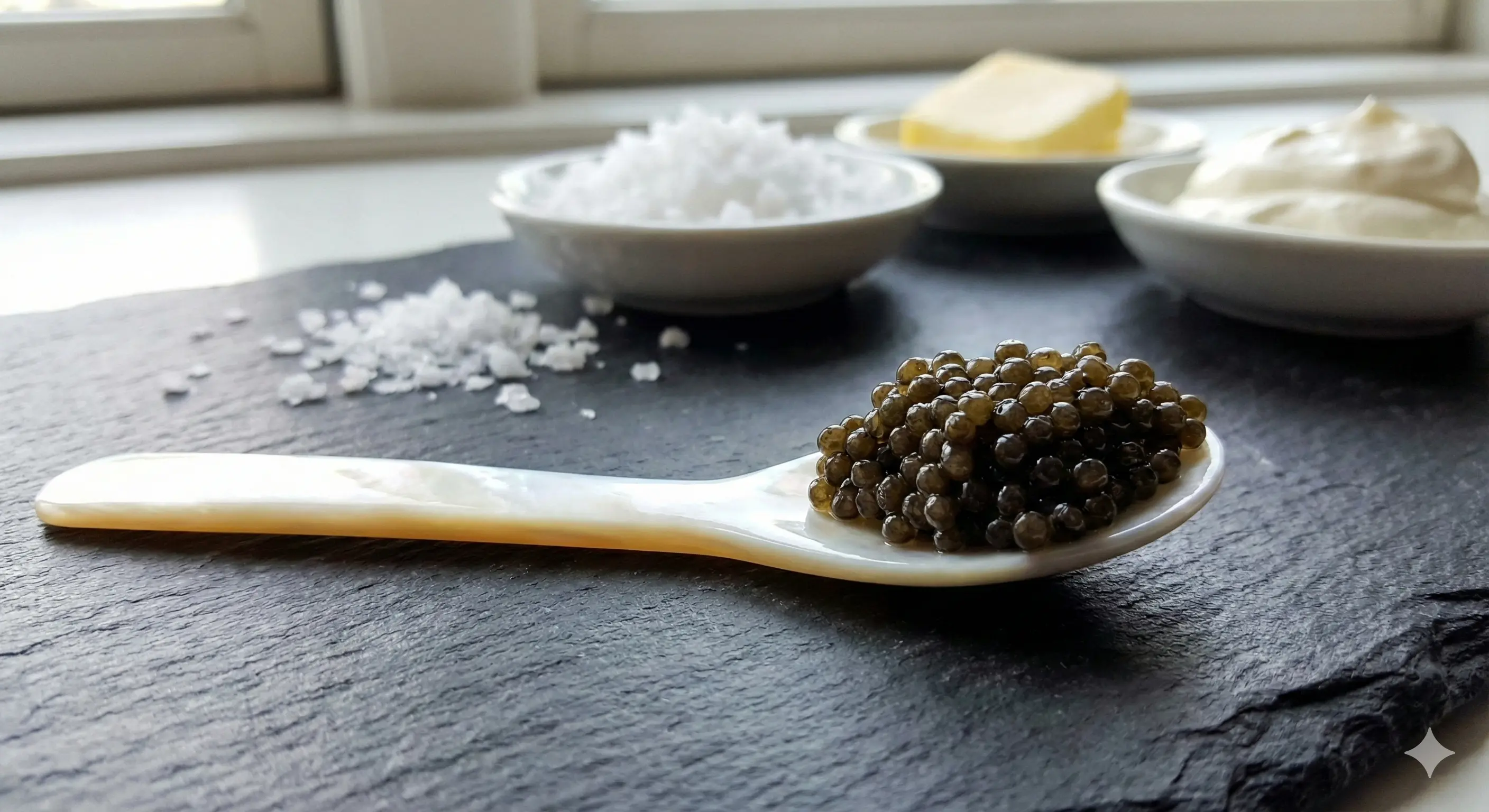
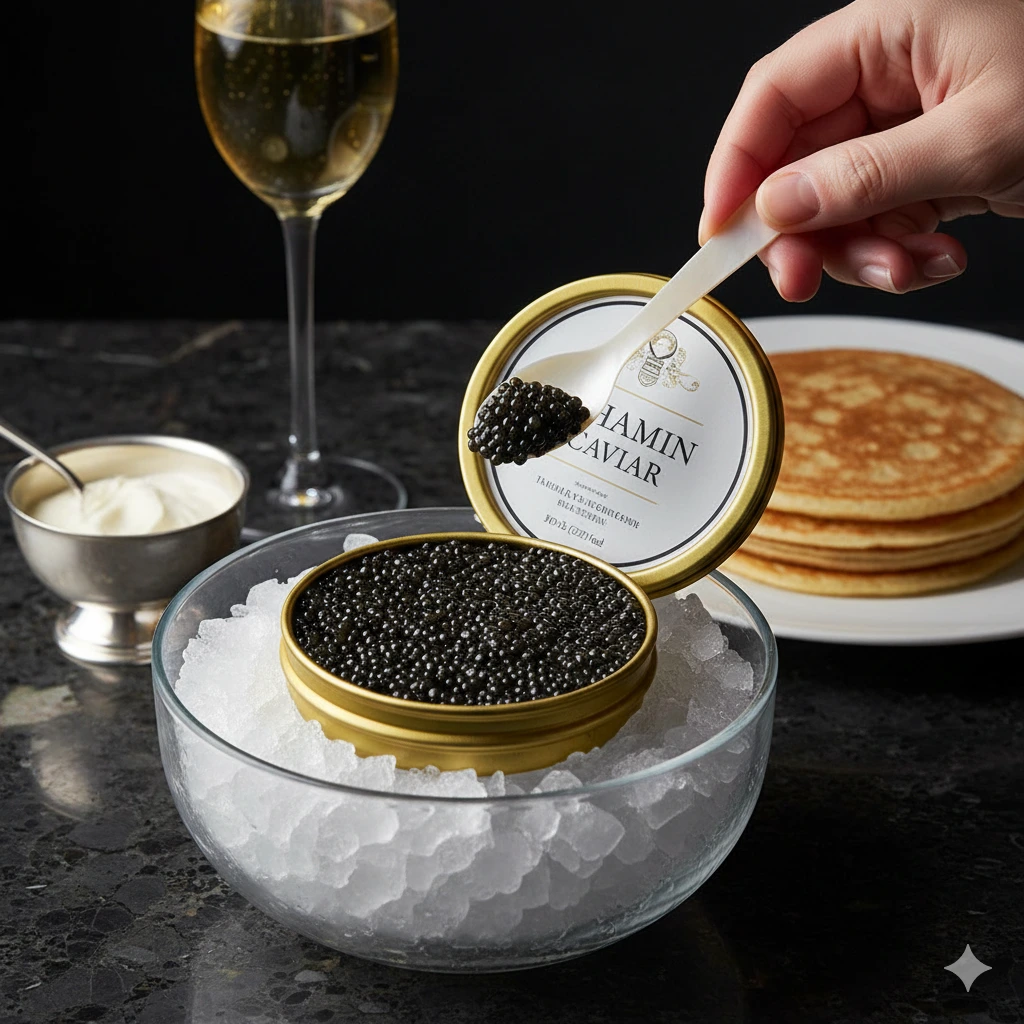
Rule #1: Put the silver spoon away.
Reactive metal can add a metallic edge fast. Use mother-of-pearl, glass, ceramic, or plastic. -
Rule #2: Don’t chew.
If you chew with your teeth, you crush the experience. Let it sit on your tongue and press the pearls gently against the roof of your mouth to release flavor.
The "Spoiled" Test: How to know if it's gone bad
Before you taste, use your nose. Caviar is fragile. Here is how to tell if your tin has turned (oxidized) or spoiled:
- The Smell Test: It should smell faint and clean (sea mist, oyster-like brine). If you get a sharp smell of ammonia, sour milk, wet dock, fish tank, or rusty metal, do not eat it.
- The Visual Test: If the eggs look badly deflated, there is a thick white film, or any visible mold, discard it immediately.
- The Taste Test: If the first flavor is sour, bitter, or aggressively metallic instead of clean brine and creamy finish, the fats have oxidized.
What to Eat & Drink with Caviar?
Because caviar is rich, you want something clean to reset your palate between bites.
- The drink: ice-cold vodka or dry Champagne.
- The food: warm blinis or lightly toasted white bread, plus a small dot of crème fraîche.
Ready to try your first real “pop”?
If you want the mildest, creamiest experience, start with Imperial Beluga.
Shop Fresh Imperial Beluga