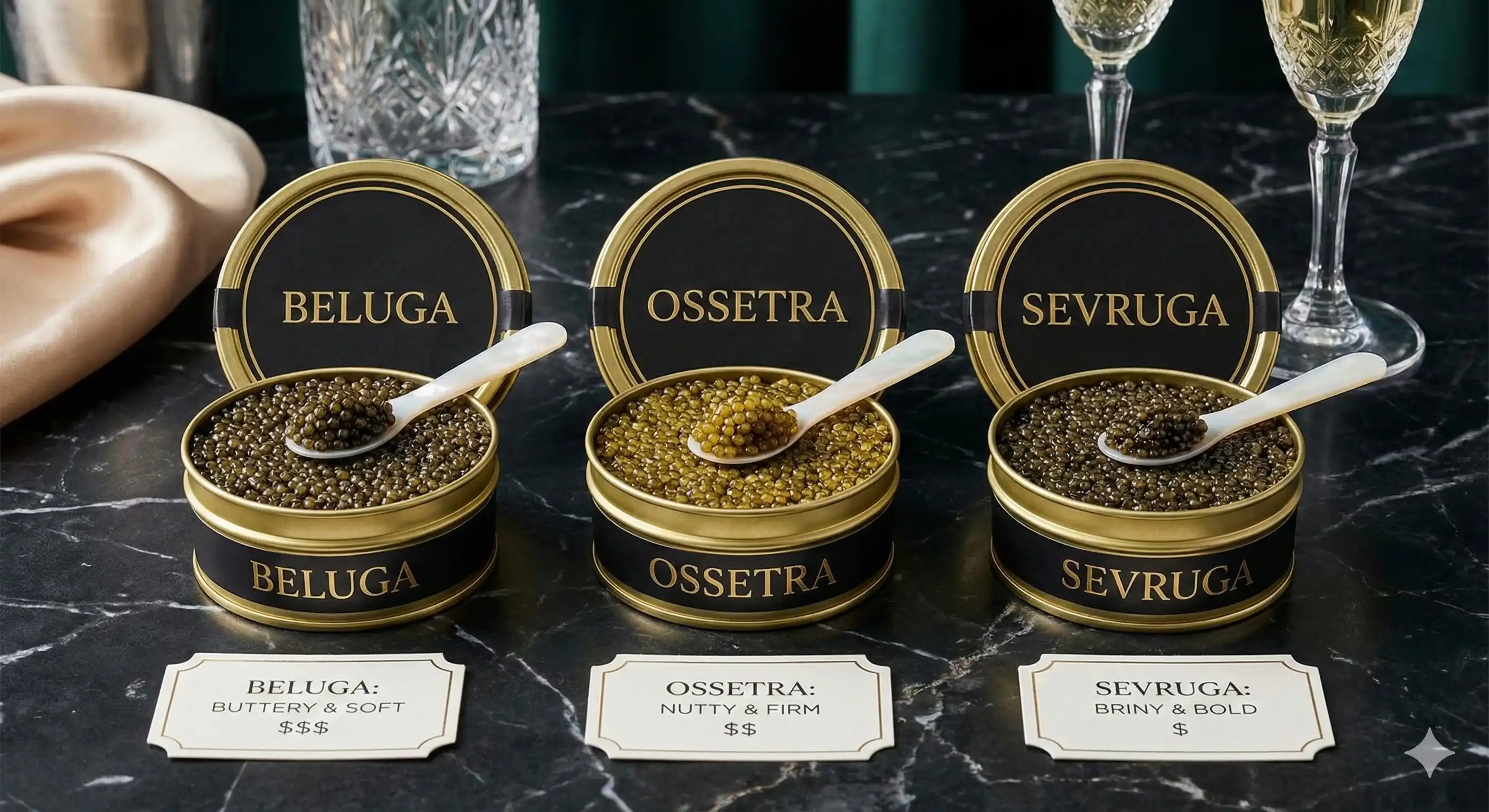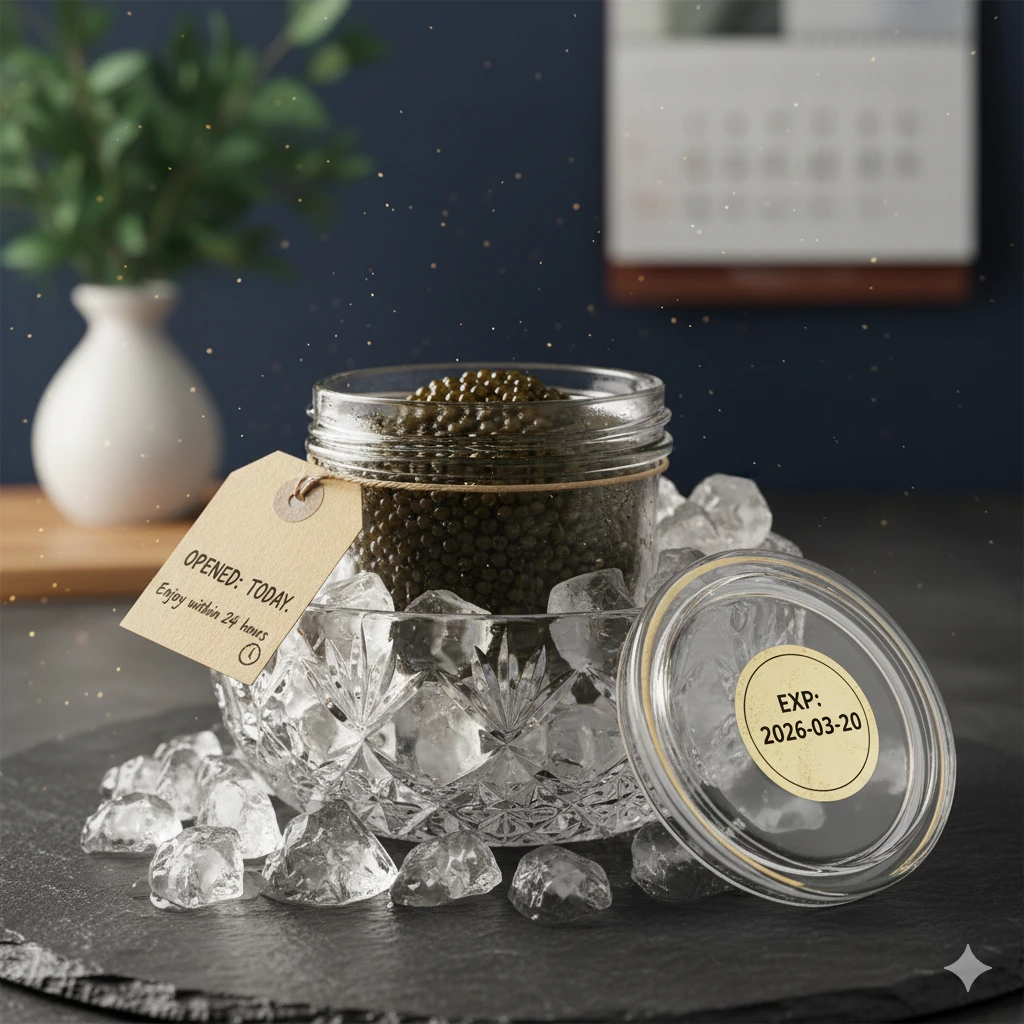
Caviar is known as a luxury food, but it is also often described as a nutrient-dense superfood. Behind the image of tiny black pearls, there is a real mix of omega-3, protein, vitamins, minerals and antioxidants that can support different parts of your health when you enjoy it in the right way.
This guide looks at the real benefits of caviar: what is inside it, how it can support heart, brain, skin, hair and even fertility, and where the story becomes more marketing than science.
What is inside caviar and why some call it a superfood
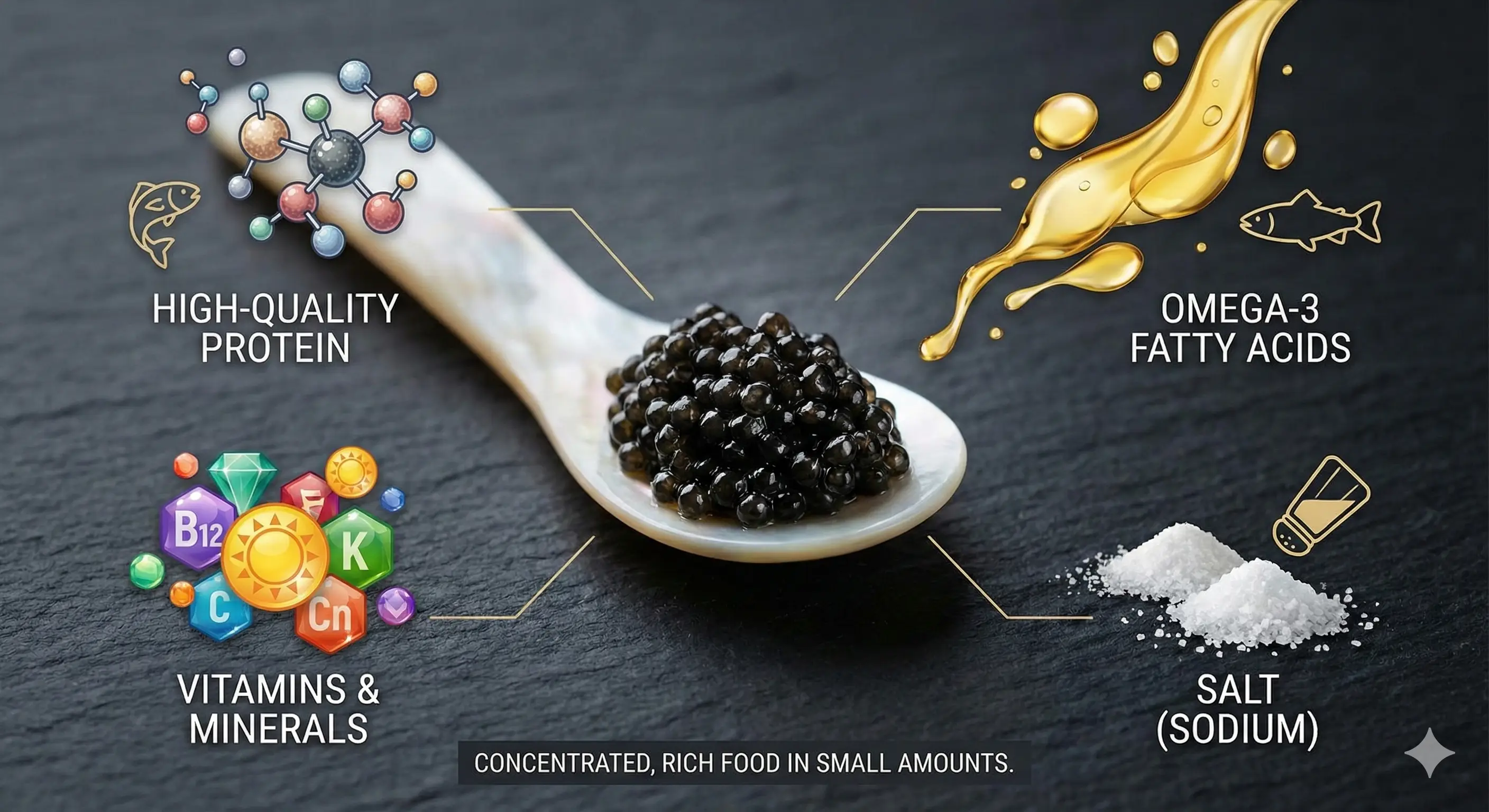
Real sturgeon caviar is a concentrated mix of fat, protein and micronutrients. Even in small portions, it can provide meaningful amounts of important nutrients:
- Complete protein (all 9 essential amino acids) for muscles and tissue repair.
- Rich omega-3 (EPA & DHA) for heart, brain and anti-inflammatory support.
- Vitamin B12 for energy, nerves and red blood cell production.
- Selenium and antioxidants (like vitamins A & E) that help protect cells from damage.
- Iron and other minerals that support hemoglobin and oxygen transport.
- Salt – all caviar is salted, so sodium is always part of the picture.
A useful detail for health-focused buyers is the curing style. Malossol means low-salt curing, often around 3–4% salt. Some cheaper products can be much saltier, which changes both taste and how “healthy” the food feels if you are watching sodium.
| Nutrient | Amount (per 1 tbsp / 15 g) | % Daily Value* |
|---|---|---|
| Protein | ≈ 4 g | ≈ 8% |
| Omega-3 (EPA & DHA) | ≈ 1,000–1,500 mg | 100%+ of suggested intake |
| Vitamin B12 | ≈ 3.5–5 mcg | ≈ 140–200% |
| Selenium | ≈ 15–20 mcg | ≈ 25–35% |
| Iron | ≈ 1 mg | ≈ 5–6% |
| Zinc | ≈ 0.5–1 mg | ≈ 5–10% |
*Values are approximate and based on average sturgeon caviar. Exact numbers vary by species and producer.
The key point: caviar is a small-volume food with high nutritional density. A single spoon can deliver more vitamin B12 and omega-3 than many larger portions of regular fish.
General health benefits for heart brain and mood
Thanks to its mix of omega-3, complete protein, vitamin B12, selenium and iron, caviar can support several key areas of health when eaten in moderation as part of a balanced lifestyle:
- Heart & circulation: omega-3 (EPA & DHA) helps maintain normal heart function and supports healthy blood fats when combined with an overall good diet.
- Brain & nervous system: DHA is a structural fat in the brain, and vitamin B12 supports the nervous system and mental performance.
- Energy & fatigue: B12, iron and complete protein help red blood cells and hemoglobin carry oxygen, which can reduce tiredness when intake is low from other foods.
- Immune support & antioxidants: selenium and antioxidant vitamins help protect cells from oxidative stress, one of the processes linked to aging and inflammation.
Some research also links omega-3 and B12 intake with better mood and lower risk of depression when combined with healthy sleep, movement and stress management. Caviar alone is not a treatment, but it can contribute useful nutrients in a small, concentrated serving.
Caviar vs. Fish Oil Supplements: Which is better?
Many of our clients ask: "Why not just take a pill?" While supplements are cheaper, real food offers "Bioavailability."
| Feature | Real Caviar (Food) | Fish Oil Capsule |
|---|---|---|
| Absorption | High (Natural fats help absorption) | Variable (Depends on coating) |
| B12 & Selenium | Naturally Present | Usually Missing |
| Additives | None (Just Roe & Salt) | Often contains fillers/gelatin |
Caviar isn't just a vitamin delivery system; it's a whole food that the body recognizes and absorbs efficiently.
Does caviar help with fertility and romance
For decades, caviar has had a reputation as an aphrodisiac. Behind the romantic image, there are some real nutrition factors that connect caviar with reproductive health, especially for men:
- Zinc & selenium are involved in normal testosterone production and sperm quality.
- Omega-3 and arginine (an amino acid naturally present in fish roe) help support blood flow, which is important for sexual function.
- Vitamin B12 and iron support energy and reduce fatigue, which can affect desire and overall performance.
This does not mean caviar is a magic cure for fertility problems or relationship issues. But as a nutrient-rich superfood, it can support the same systems (hormones, circulation, energy) that doctors look at when discussing male fertility and sexual health. Think of it as a support food, not a miracle drug.
Benefits of caviar for skin from inside and outside
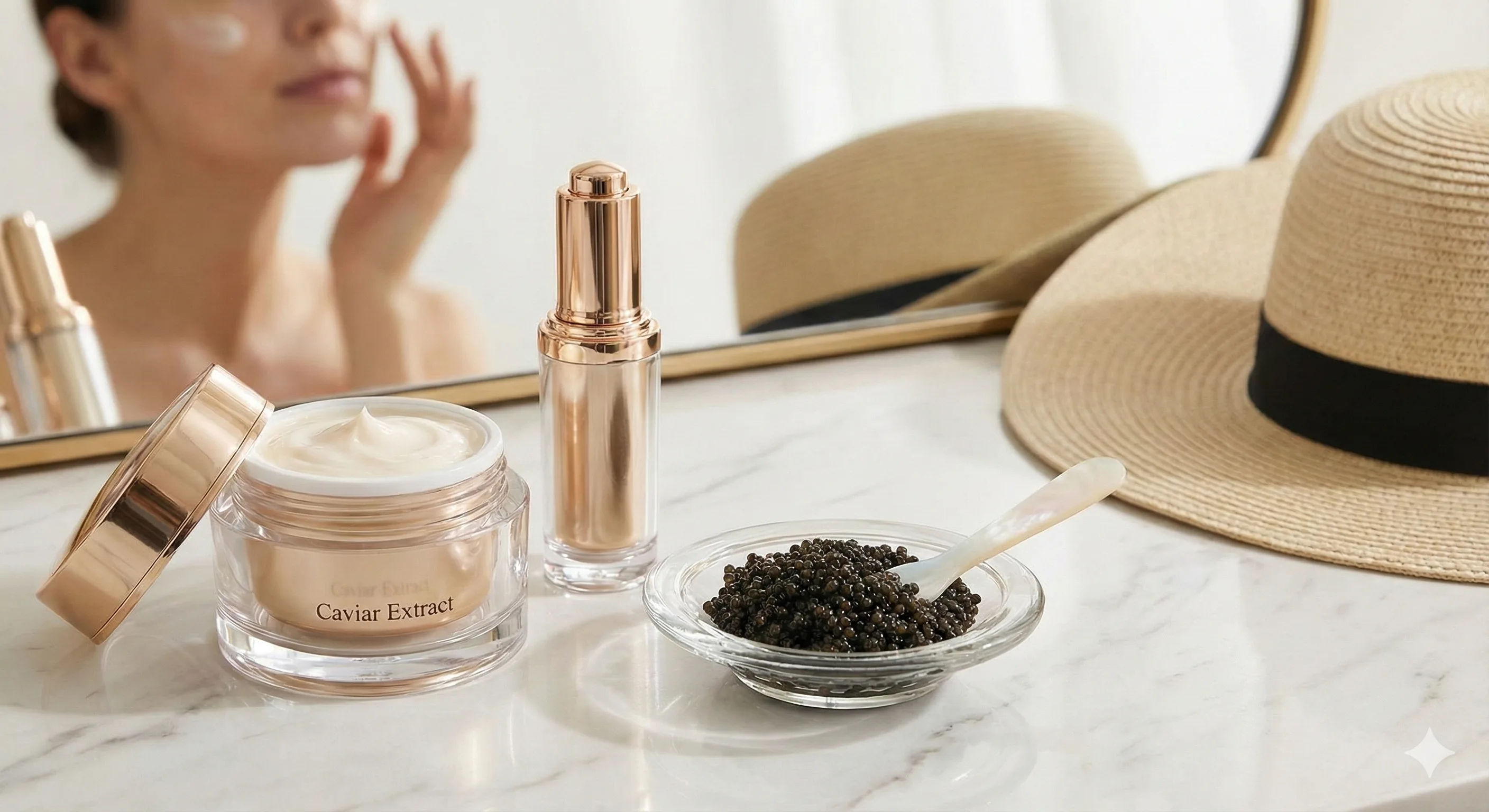
Many skincare brands use “caviar extract” in creams and serums, and there is some logic behind it. Caviar and its extracts are naturally rich in omega-3, proteins, peptides and antioxidants, which are all linked to skin health.
From a science point of view, key points are:
- Omega-3 fatty acids help support the skin barrier, reduce dryness and calm irritation when your overall diet includes enough of them.
- Antioxidants (like vitamins A & E) in caviar help protect skin cells from oxidative stress, one of the processes that speeds up visible aging.
- Peptides and amino acids are building blocks that the body uses in collagen synthesis, which supports firmness and elasticity.
Eating small amounts of real caviar as part of a varied diet is likely more effective for long-term skin support than relying on creams alone. Cosmetic products with caviar extract can be a nice addition, but the full formula, sun protection and daily habits still matter much more than one luxury ingredient.
Benefits of caviar for hair and scalp
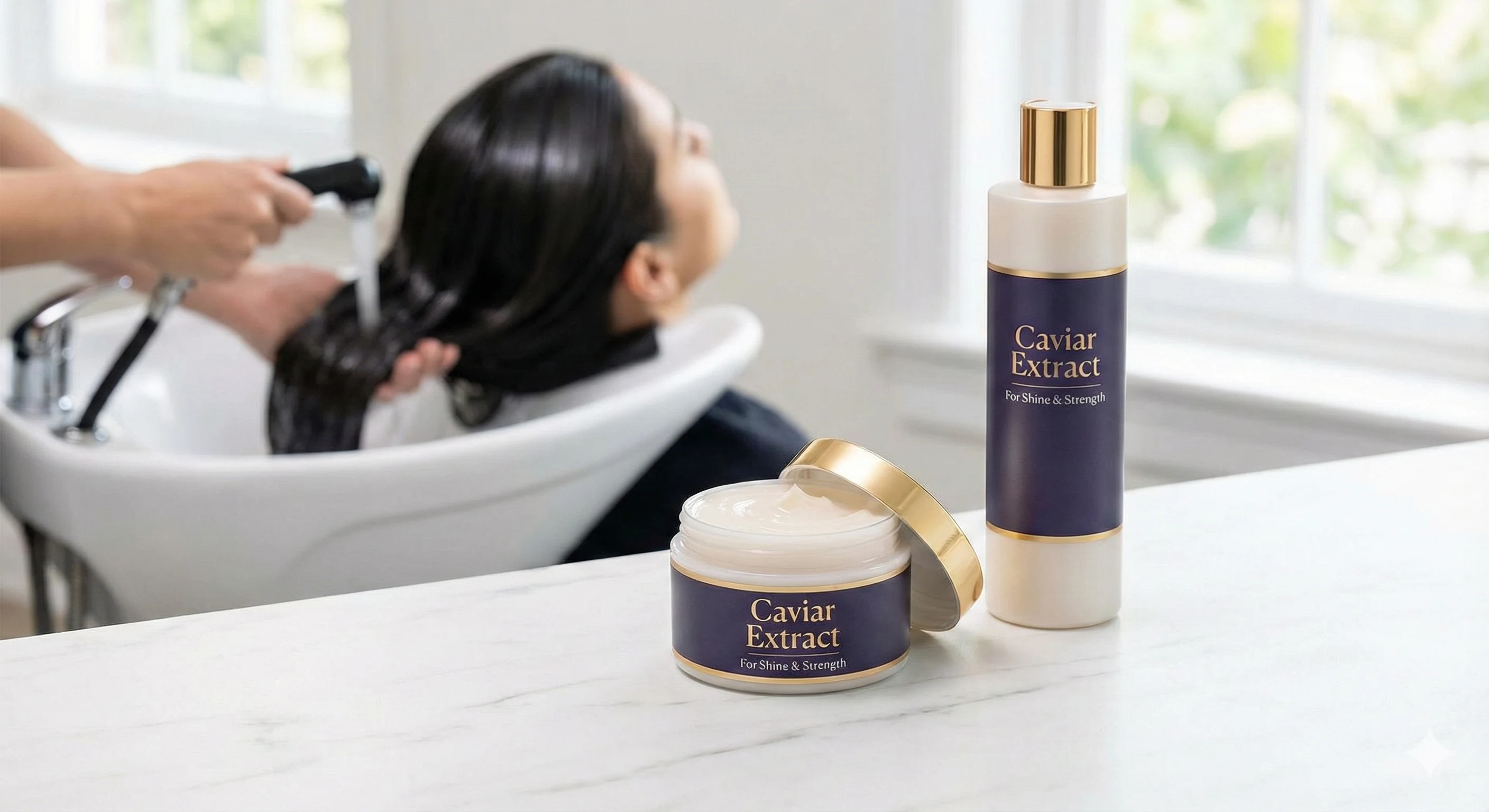
Hair products that promote “caviar extract” usually focus on shine, strength and dryness. The direct effect on hair strands comes mostly from how the product coats and protects the hair shaft, but caviar’s nutrition can still play a role in overall hair and scalp health:
- Protein and amino acids provide building blocks for keratin, the main structural protein in hair.
- Omega-3 and antioxidants support the scalp by helping circulation and reducing oxidative stress that can weaken hair over time.
- B vitamins and iron contribute to normal red blood cell formation and blood flow, which brings oxygen and nutrients to hair follicles.
Good caviar-based masks and shampoos can help hair feel softer and look shinier, but lasting changes still depend mostly on diet, hormones, stress levels and gentle care. Caviar is a strong support ingredient, not a magic solution for hair loss or serious damage.
How much caviar do people really eat
One important detail: normal serving sizes of caviar are small. For most people:
- A tasting portion is around 5–10 g per person.
- A generous caviar service might be 20–30 g per person.
This means you cannot treat caviar like a large daily food source. It is more like a concentrated superfood that you enjoy sometimes. The benefits are real, but the quantities are modest, so it works best as part of an already healthy pattern of eating.
When benefits of caviar are mostly hype
Marketing often stretches the truth. Here are cases where the “benefits of caviar” are usually more hype than reality:
- Very cheap “caviar” products: if the price is extremely low and the label is unclear, the product may contain little or no real sturgeon caviar, and almost no of the nutrients listed above.
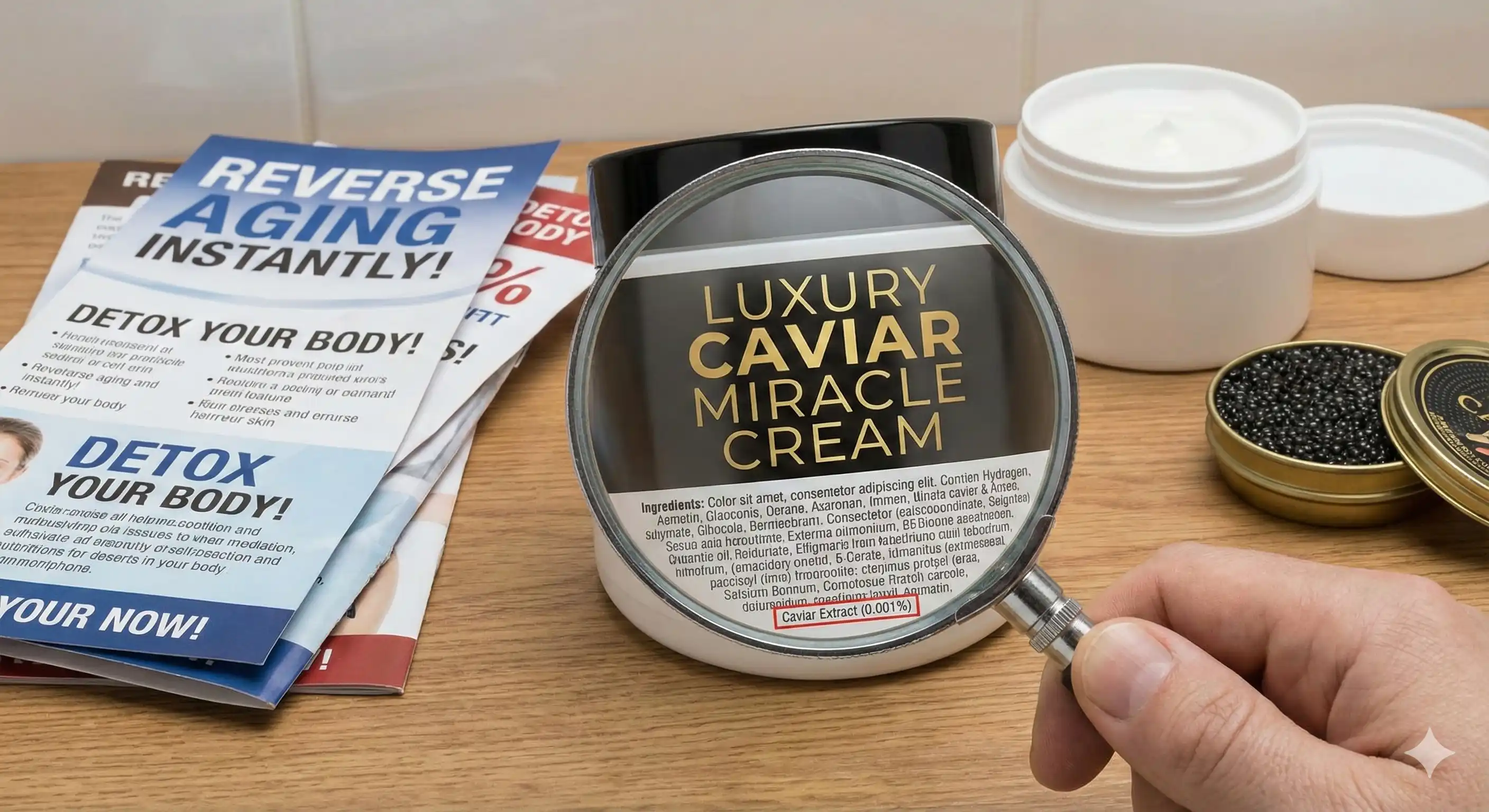
- Miracle health promises: claims that caviar alone will “clean your body”, “reverse aging” or “cure” specific diseases are not evidence-based.
- Cosmetics with a tiny drop of caviar extract: the box uses the word “caviar” in big letters, but the effect often comes from standard skincare ingredients like humectants and oils.
A simple rule: if the promise sounds too strong for a food you eat by the spoon, it is probably marketing, not science.
Who should be careful with caviar
Caviar is safe for most healthy adults when eaten occasionally, but some people should be more careful:
- People who must limit salt: caviar is always salted, so sodium can add up quickly.
- Those with fish or seafood allergy: caviar is a fish product and can trigger reactions.
- People with special medical diets: if you have heart, kidney or other conditions, it is better to follow your doctor’s advice about salty and rich foods in general.
Caviar is a treat, not a daily basic food. Enjoying it sometimes is usually fine, but it should not replace balanced meals rich in vegetables, whole grains and regular sources of fish.
So are the benefits of caviar worth it
The real benefits of caviar are a mix of nutrition and experience. In a few grams you get high-quality protein, omega-3, B12, selenium, iron, zinc, antioxidants and support for skin, brain, heart and even fertility – plus the feeling of serving something rare and carefully produced.
It becomes “worth it” when:
- You choose real sturgeon caviar from a trusted source like Thamin Caviar. Explore our certified Beluga collection .
- You enjoy it slowly, at the right temperature, and in realistic servings.
- You see it as a powerful, science-backed superfood treat, not a miracle cure for health or beauty.
If you want to go deeper after this overview, you can read more about what caviar really is, how caviar is made, or check the caviar price in Oman before you choose your tin.