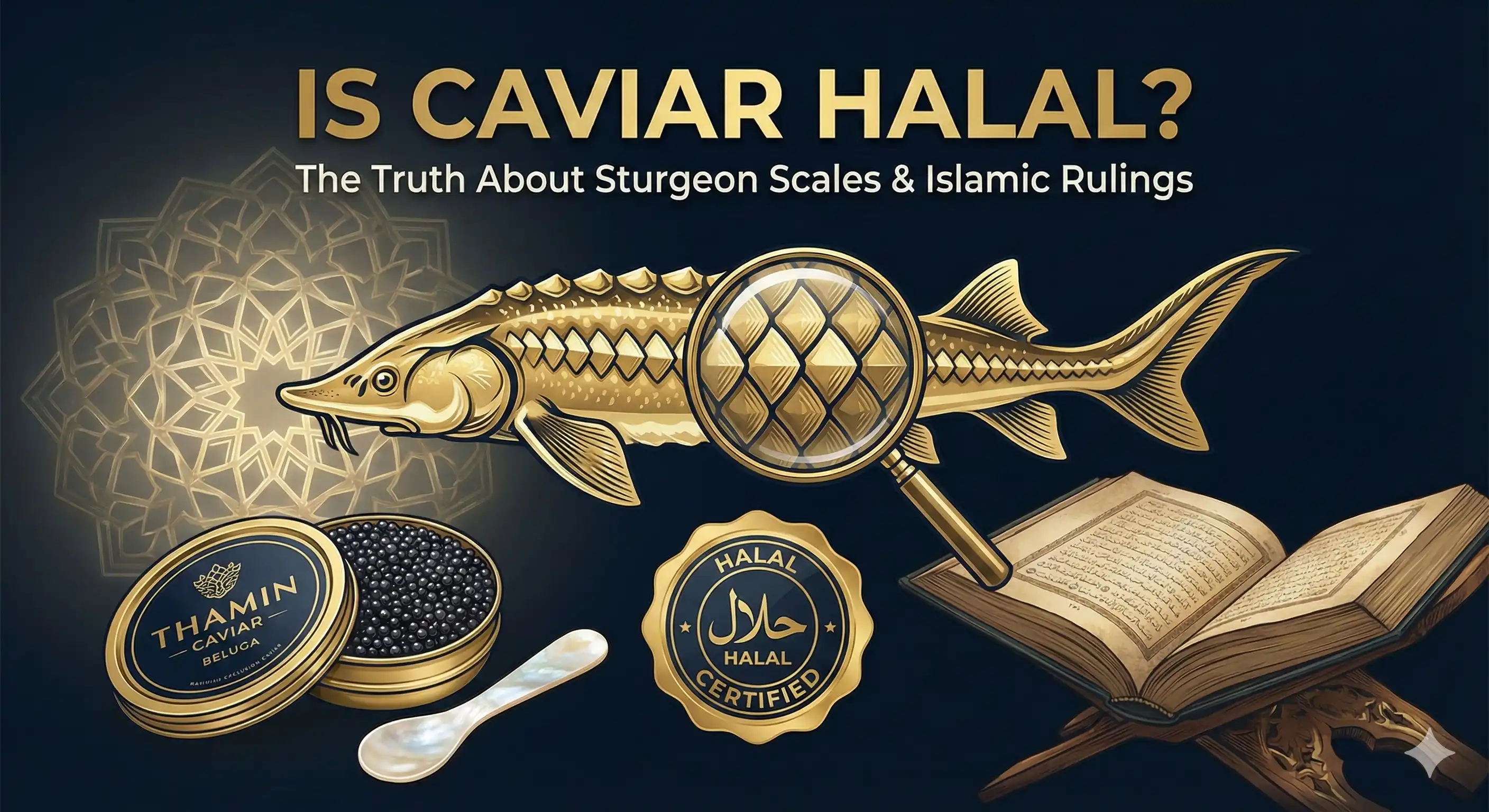
Is caviar halal in Islam? For most Muslims, caviar is halal if it comes from a halal fish and contains no haram additives. In Sunni schools, seafood is generally permissible. In Shia fiqh, it depends on whether the source fish is accepted as a fish with scales.
Many Muslims still ask a simple question: is caviar halal? For some, the worry is the fish itself (sturgeon). For others, it is alcohol, additives, gelatin, or imitation “caviar” products. This guide explains when you can clearly say that caviar is halal, based on common Islamic rules and practical ingredient checks.
Quick Answer: Caviar Halal or Haram?
- Is caviar halal? Usually yes, if the source fish is halal and there is no alcohol/haram additives.
- Is caviar haram? It becomes haram if it comes from a non-halal fish (in your fiqh) or contains alcohol/haram ingredients.
- Can Muslims eat caviar? Yes, when it matches your school’s ruling and the ingredients are clean.
- Are fish eggs halal? Fish eggs follow the ruling of the fish.
Is Caviar Halal Shia?
In Shia fiqh, the key rule is: fish with scales are halal (shrimp is also allowed). Caviar follows the ruling of the fish. If the fish is accepted as “with scales,” its caviar is halal. Followers should check the exact fatwa of their own marjaʿ.
Is Caviar Halal Sunni?
In many Sunni schools, seafood is broadly permissible. Because caviar is fish roe, it is generally treated as permissible unless a separate haram ingredient is added. The main practical issue for Sunni consumers is usually additives, not the roe itself.
Is Sturgeon Halal? (The key question behind “Is caviar halal?”)
Caviar is usually sturgeon roe. So the real question becomes: is sturgeon a fish with scales or not? If sturgeon is accepted as a fish with scales, then its caviar is halal. If a person believes sturgeon is not “with scales,” then sturgeon caviar is not halal for that person (in that view).
Basic rule in Islam: fish with scales are halal
Classical Islamic law gives a simple foundation: fish that have scales are halal. In many Sunni schools, all fish are allowed, and this condition mainly excludes other sea creatures. In Shia fiqh, the rule is stricter: only fish that are classified as “with scales” are halal, plus shrimp. Other sea animals are not allowed to eat.
Caviar follows the ruling of its source fish. If the fish is halal, its eggs are halal. If the fish itself is not allowed, then its eggs are also not allowed. So the key question becomes: does sturgeon count as a fish with scales or not?
Does sturgeon have scales? The scientific answer
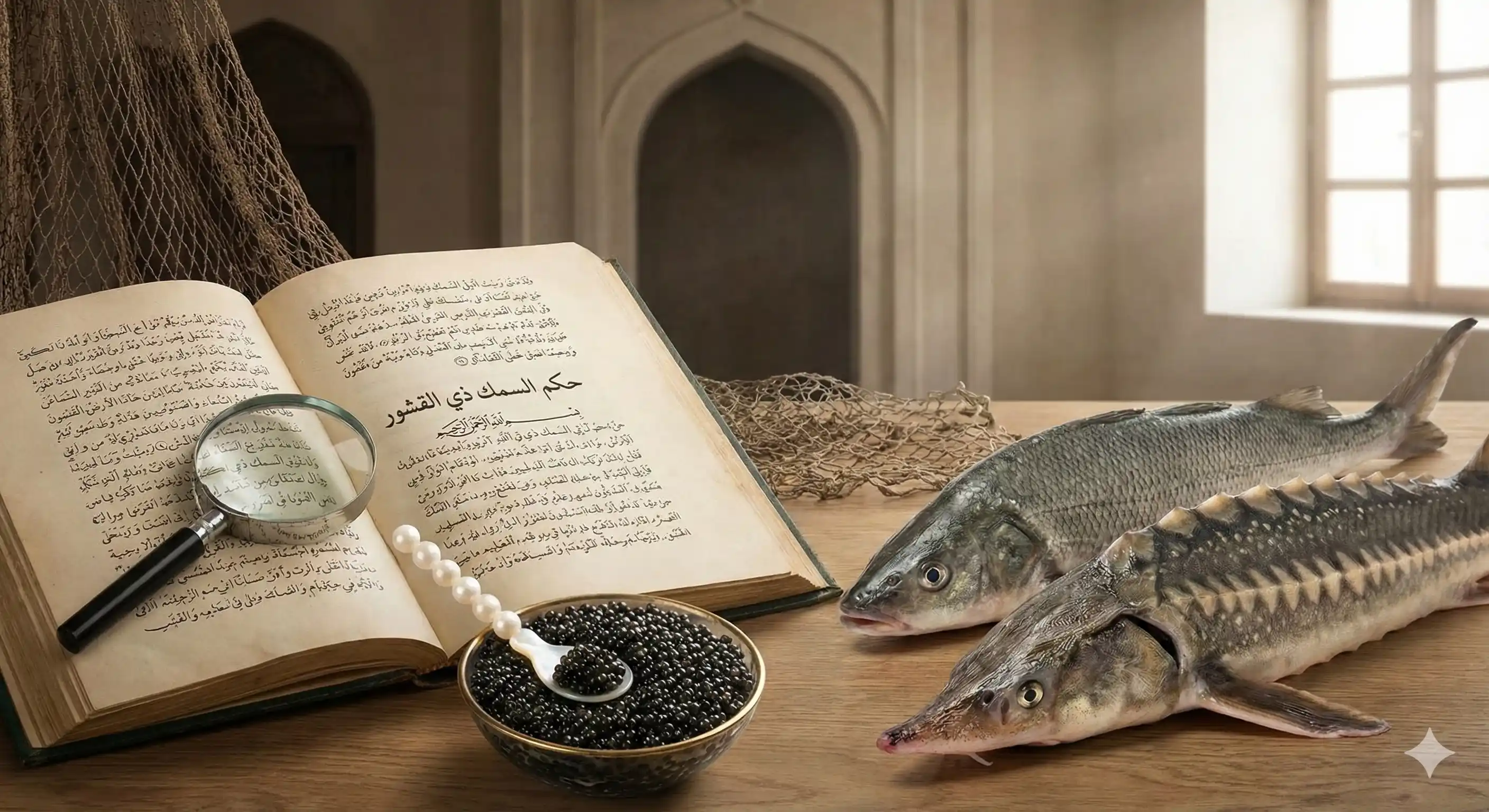
Sturgeon (the family Acipenseridae) are ancient fish. Their bodies are not covered in small round scales like many common fish. Instead, they have five rows of bony plates along the body, called scutes. In fish science, these plates are described as modified ganoid scales – a primitive type of scale found in older fish groups.
Experts often mention specific species such as Beluga sturgeon (Huso huso) and Stellate sturgeon (Acipenser stellatus, sometimes called “Uzun Burun”). Both have hard ganoid scales arranged in rows along the body, which fits the scientific description of a fish “with scales,” even if the appearance is different from thin overlapping scales on common fish.
In other words, from a scientific point of view, sturgeon are not “skin-only” fish. They do have a form of scales, but in a harder, armour-like style rather than the thin scales most people imagine.
Because Islamic law looks at whether a fish is classified as having scales, many contemporary jurists accepted expert testimony that sturgeon falls into the “scaled fish” category, even if the scale type is unusual. This scientific point is what later allowed many scholars to say that caviar is halal.
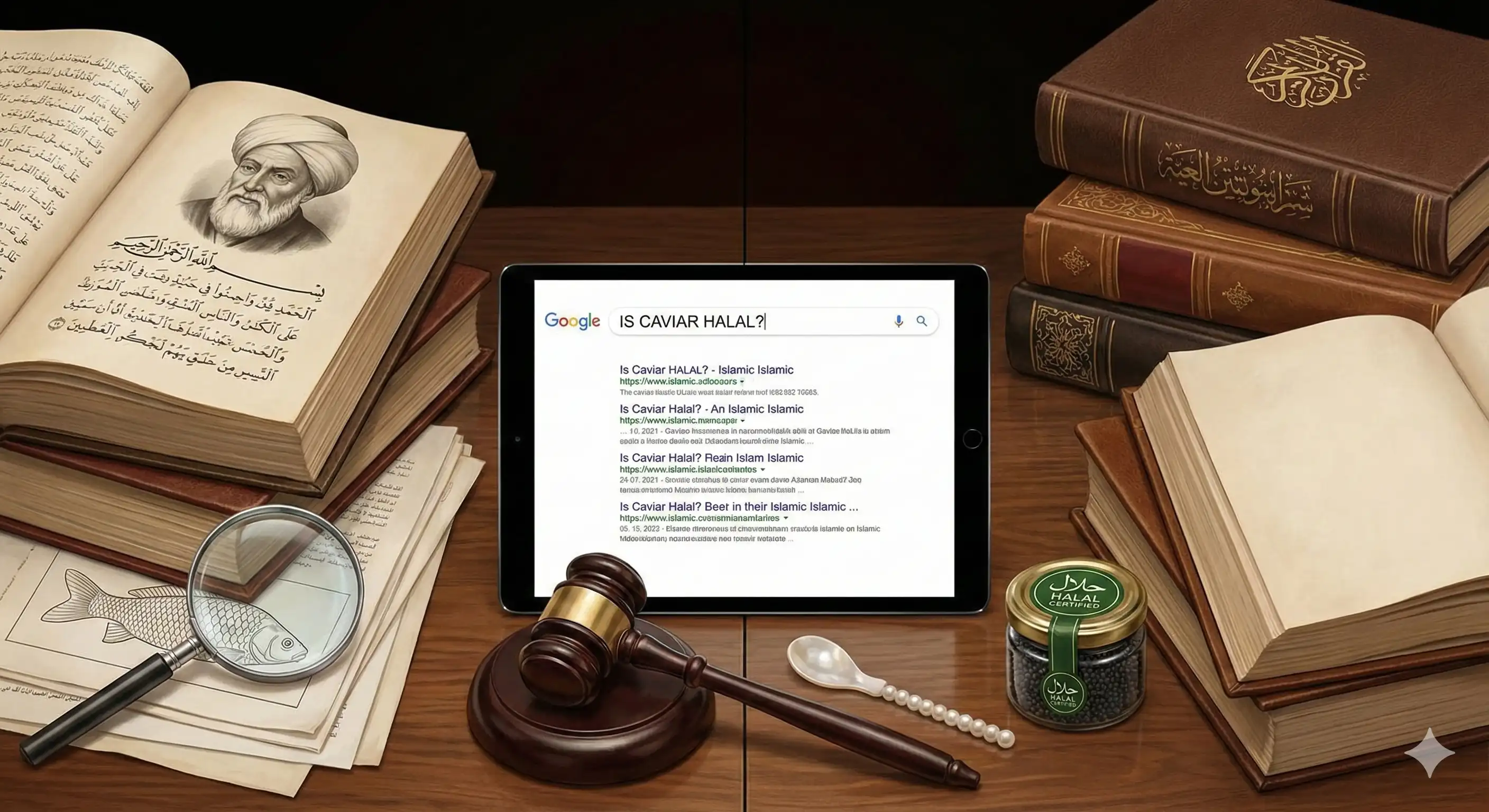
What do major scholars and marajiʿ say about caviar?
When Muslim consumers ask “is caviar halal?”, they usually want to know what their marjaʿ al-taqlid (for Shia) or trusted sheikh (for Sunni) has ruled. Several major Shia authorities accepted sturgeon as a scaled fish and therefore ruled its meat and caviar to be halal.
In practical terms, many well-known Shia authorities such as Ayatollah Sistani, Ayatollah Khamenei and Ayatollah Makarem Shirazi allow sturgeon caviar under specific conditions, usually based on expert confirmation that sturgeon has ganoid scales. Each follower should still check the exact fatwa of his or her own marjaʿ.
For Sunni scholars, the issue is often simpler. Many Sunni jurists, especially in the Shafiʿi, Maliki and Hanbali schools, already allow all types of seafood. The Hanafi school has more detail, but fish roe is usually treated as part of the fish itself. Once sturgeon is accepted as a fish with scales, its caviar is also considered halal.
| Authority / School | Ruling on sturgeon caviar | Condition / notes |
|---|---|---|
| Ayatollah Sistani (Shia) | ✅ Halal | If you are satisfied that the fish has scales. |
| Ayatollah Khamenei (Shia) | ✅ Halal | Accepts sturgeon as a scaled fish based on expert testimony about ganoid scales. |
| Hanafi school (Sunni) | ✅ Halal | Fish roe is treated as part of the fish (tabaʿan) when the fish itself is accepted. |
| Shafiʿi / Maliki / Hanbali (Sunni) | ✅ Halal | All seafood is generally permissible unless a separate harm is proven. |
| Ayatollah Makarem Shirazi (Shia) | ✅ Halal | Allows sturgeon based on expert confirmation that species such as Beluga and Stellate have scales. |
When caviar becomes haram: additives and imitation products
Even if your marjaʿ or sheikh has ruled that sturgeon caviar is halal, some “caviar” products on the market are not suitable. The problem is not the fish, but the added ingredients.
Premium sturgeon caviar is often produced using the classic Malossol method (salt only). Problems usually appear with cheap supermarket “caviar” or imitation roe.
- Alcohol in flavouring or preservation – sometimes used in low-quality substitutes.
- Gelatin or animal-based stabilisers – if from non-halal animal sources, status becomes doubtful.
- Mixed or imitation roe – may be sold as “black caviar” but is not sturgeon roe.
- Non-halal processing lines – cross-contamination concerns in some factories.
The safest approach is simple: choose products with clear labelling, no alcohol, and a transparent producer.
FAQ (Quick Answers)
Is caviar halal or haram?
Caviar is halal when the source fish is halal for you and the ingredients are clean. It becomes haram if the fish is not halal (in your school) or if alcohol/haram additives are present.
Can Muslims eat caviar?
Yes. Most Muslims can eat caviar if it follows their school’s seafood rules and the product contains no alcohol or haram ingredients.
Are fish eggs halal?
Fish eggs follow the ruling of the fish. If the fish is halal for you, its roe is also halal.
Is caviar halal Hanafi?
In Hanafi fiqh, fish is permissible and roe is usually treated as part of the fish. The main concern is avoiding alcohol and haram additives.
Is caviar halal Sistani?
Many followers understand the ruling as permissible if you are satisfied the fish has scales. Always follow the exact guidance of your marjaʿ for personal certainty.
Is sturgeon halal?
Many contemporary scholars accept sturgeon as having a form of scales (ganoid scales/scutes). If accepted as “with scales” in your fiqh, sturgeon and its caviar are halal for you.
So when can you say “caviar is halal”?
To keep it practical, here is a simple checklist for Muslim consumers:
- Your marjaʿ or sheikh accepts sturgeon as a scaled fish.
- The product is clearly labelled as sturgeon caviar.
- The ingredient list is clean. No alcohol, no doubtful carriers, and no haram gelatin.
- The producer is transparent. Clear origin, species, storage, and certificates.
When these points are met, you can confidently say that caviar is halal for you to eat. The short answer: for most Muslims who follow scholars that accept sturgeon as a scaled fish and choose clean products, caviar is halal.
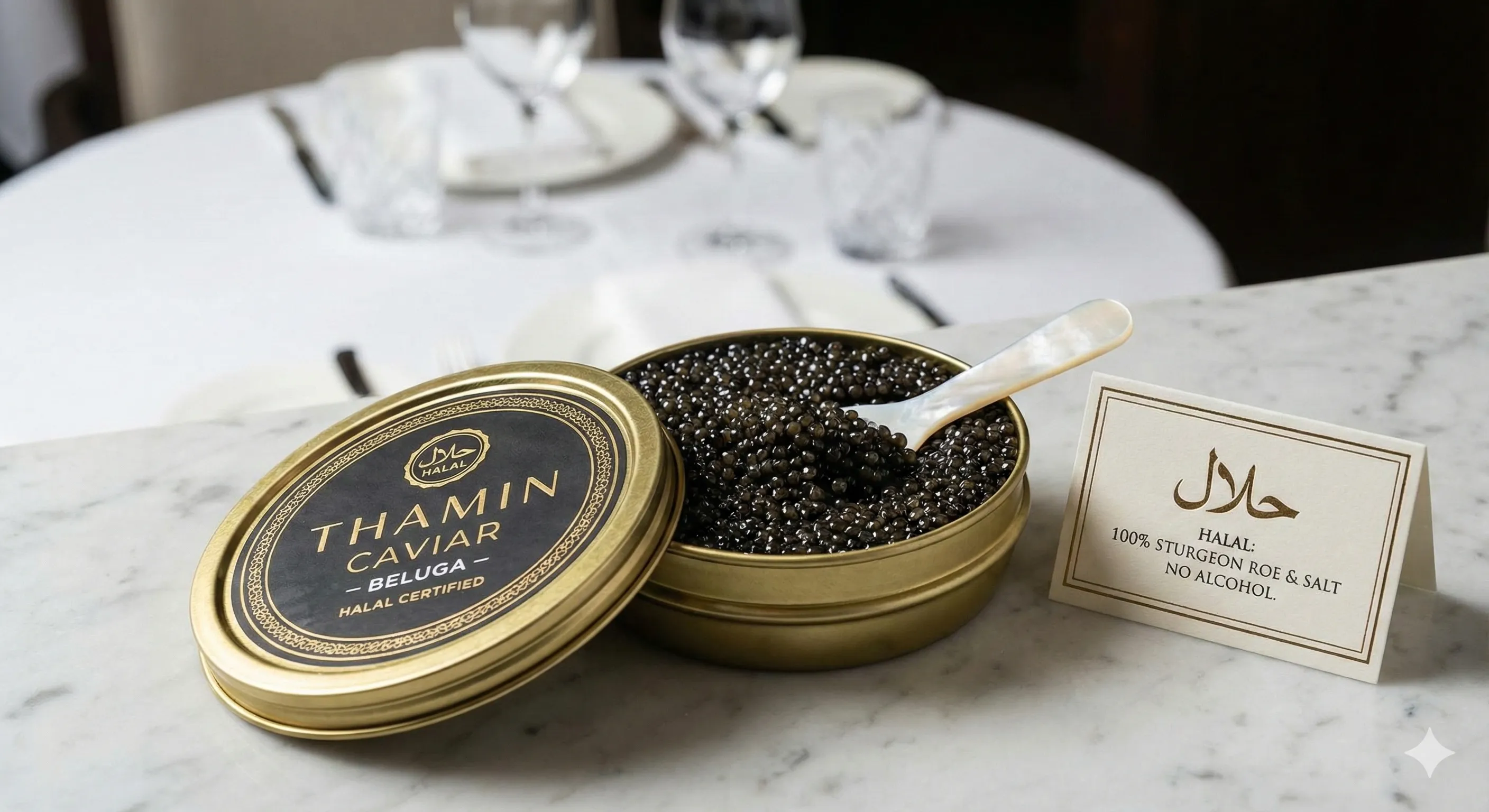
Transparency and Trust
This article is a practical summary of common Islamic dietary rules and common scholarly positions. It is not a personal fatwa. For religious certainty, follow your own marjaʿ or trusted local scholar.
Last updated: 2026-01-13